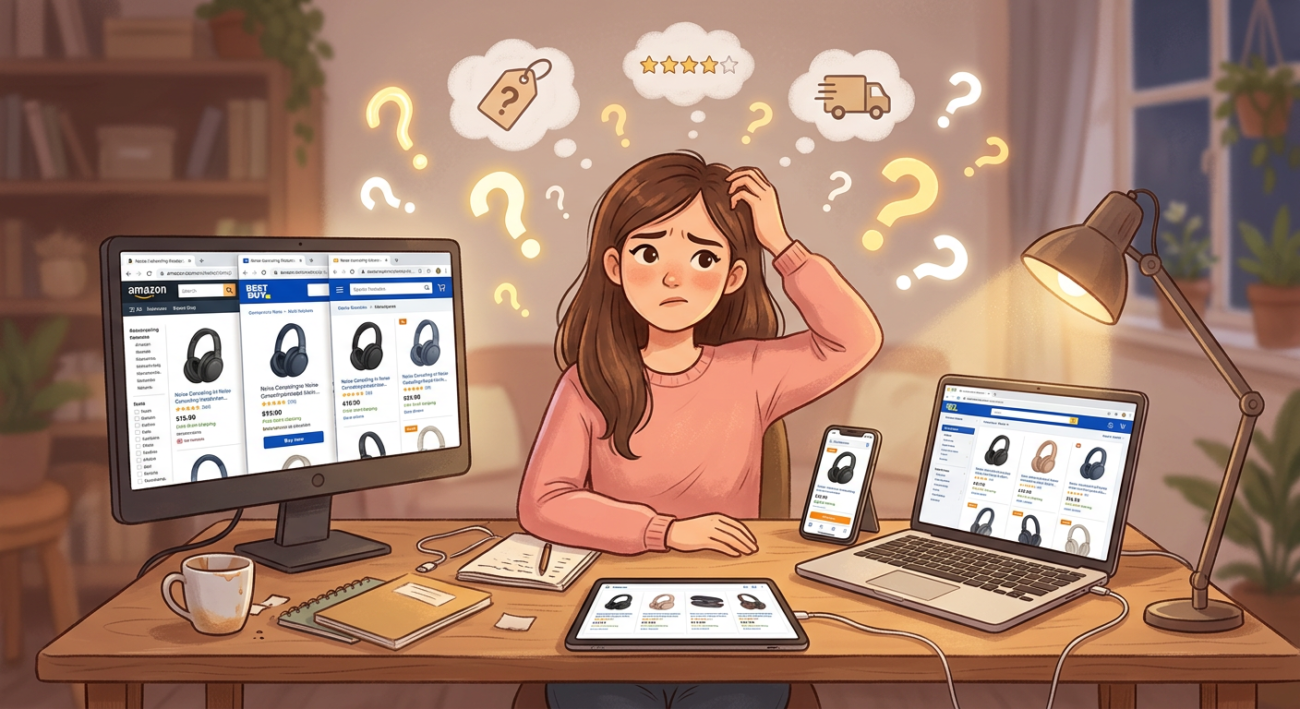
Even if you like the content, why don’t you buy it?
We see various types of content on social media, blogs, videos, articles, every day. Some articles, videos, posts seem very interesting to us. We enjoy them, comment on them, share them, but in the end, that content fails to inspire us to buy anything. This is a common problem for many creators and business strategists.
But where does the problem lie? The content is excellent, the skill is there, the audience likes it, but why doesn’t it get sold? It’s not just a problem of style; it’s a problem of our mental states, worries, perception of needs, and decision-making style.
First of all, we should note that **liking and buying are two different things**. We show sympathy, interest, and liking for that content, but when we actually buy, there are some expectations, doubts, financial limitations, or compatibility issues.
In this article, we will discuss this problem **analytically**, **numerically**, **calculated**, **with practical examples**, and **via fax**.

Why does liking content not lead to weight gain?
1. Difference in ideas
Thinking strategically, we like content only for emotion, entertainment, or understanding. For example, a person may read a cooking article and enjoy it, but may not decide to buy cooking utensils for use at home.
Here the **difference between liking and need** becomes clear. Liking is a feeling of sympathy, joy, and knowing, but buying is a need, preference, and financial ability.
2. Financial constraints
Even if there is a need, if the person does not have the financial ability, weight gain does not occur. For example, a student sees a new gadget video and thinks it is very interesting, but cannot buy it due to his budget.
**Related Calculation:**
* Gadget Price: ₹15,000
* Monthly Salary of the Person: ₹20,000
* Main Expenses (Accommodation, Food, Transportation): ₹12,000
* Disposable Income = 20,000 – 12,000 = ₹8,000
Here, the location is too expensive for the person, so even if he likes it, the purchase will not happen.
3. Trust and Confidence Issues
When we see any new product, we should have trust in that product. A delicate situation: A person watches a video of a fitness product related to the body and thinks it is very useful, but because of not seeing the actual results and not enough reviews, he may not buy it immediately.
4. Lack of Details
Even if the content is great, it does not **provide the right information** and the purchase will not happen. Example: A website mentions a new course, but does not detail the price, modules, and benefits, so the audience is not satisfied and does not grow.
Understanding the differences by numbers
1. Liking Vs. Buying
From every 100 audience:
* 70 people like the content
* Only 30 people buy
That is, even though 70% like it, only 30% take action.
**Comparatively:**
| Situation | Liking | Growing | Rate % |
| Article A | 100 | 30 | 30% |
| Article B | 100 | 40 | 40% |
Here, why is the rate different?
* Article B has more details, confidence, and urgency.
2. Economic Impact
If a product costs ₹10,000, a consumer has a deductible of ₹5,000, and he has the ability to spend 50% of his disposable income, the probability of obesity is low.
**Simple calculation formula:**
`Fat probability (%) = (disposable income / product price) × 100`
Example:
* Disposable income = ₹5,000
* Product price = ₹10,000
Fat probability = (5000/10000) × 100 = 50%
For many, a lack of clarity can affect audience decisions. For example, if a video/content about a new fitness tool is not explained in great detail, the audience may not understand its utility, proper use, and future benefits. They may like it and leave reviews, but it becomes difficult to take a subscription, purchase, or investment action.
In terms of numbers, in a survey, 80 out of 100 people liked the content, but 60% did not take action due to the lack of proper details and usage instructions. This clearly shows that providing complete transparency to the audience is crucial.
Calculations section
Example 1: Product purchase calculation
A person has a monthly salary of ₹25,000, expenses of ₹15,000, and a total product price of ₹8,000
* Disposable income = 25,000 – 15,000 = ₹10,000
* Probability = (10,000 / 8,000) × 100 = 125% → That is, there is definitely a fat probability
Example 2: Subscription service
* Monthly subscription = ₹1,200
* 1,000 people in the audience watched, only 100 took action
* Conversion rate = (100 / 1000) × 100 = 10%
Through these calculations, we can clearly understand **how fat decisions are based on financial size, trust, and urgency**.
Practical examples
1. **Cookbook**:
The audience reads and shares the recipes in the book with great interest, but it is common for the book not to be fat. Because, even though they have kitchen instruments or ingredients readily available for fat, they may not be fat due to budget or preferences.
2. **Fitness Course**:
A video showing workouts, the audience likes it. But, the fat does not happen due to subscription fee, product reviews, or personal timetable mismatch.
3. **Gadget Review**:
A smartphone review, showing the best features. The user likes it, but his budget, current
Universal FAQ
Q1: Why doesn’t fat happen even if you like it?
A: Like is an emotion; buying is a financial and necessity decision.
Q2: What can be done to increase fat rate?
A: Build trust, simple information, clearly show the need.
Q3: How to understand when content is liked, but fat is low?
A: Look at financial conditions, urgency, alternatives, personalization.
Q4: How to estimate fat based on calculations?
A: Disposable income, product price, probability formula should be used.
Q5: Is patience needed on fat issue?
A: Yes, educating the audience, building trust, patience are key for fat.
Conclusion
Now we understand that liking content and churning are two different things. If you have a liked audience, it is normal for them not to make a purchasing decision.
After reading the article again, we should note:
- Emotion vs. Need
- Financial Capability
- Trust and Belief
- Lack of Details
It is very important to understand all these points with patience, wisdom, and a long-term view. It is common for an audience to not churn just because of liking. But you can estimate the churn rate and deal with it properly with patience, clarity, and understanding the audience’s needs.
What we need to learn in this process is: Don’t expect results right away, educate the audience, show empathy, and provide details. Through this, you can effectively influence not only the liked audience, but also the audience that takes action.
External Links
https://www.uplify.ai/why-people-dont-buy-10-psychological-reasons/?utm

3 thoughts on “Why People Don’t Buy Even If They Like Your Content”