Introduction
Marketing is often seen as a magical process that instantly brings customers, sales, and brand recognition. For beginners, the internet is full of advice, tutorials, and “growth hacks” promising quick results. While some of these tips are helpful, many are built on myths that can mislead new marketers.
Believing these myths can lead to wasted budgets, unrealistic expectations, and frustration. Successful marketing is not about shortcuts or tricks. It is about understanding your audience, building trust, and consistently delivering value.
In this article, we will explore some of the most common marketing myths that mislead beginners. We will also explain why these myths exist, how they affect marketing strategies, and what you should focus on instead.
Suggested Visual:
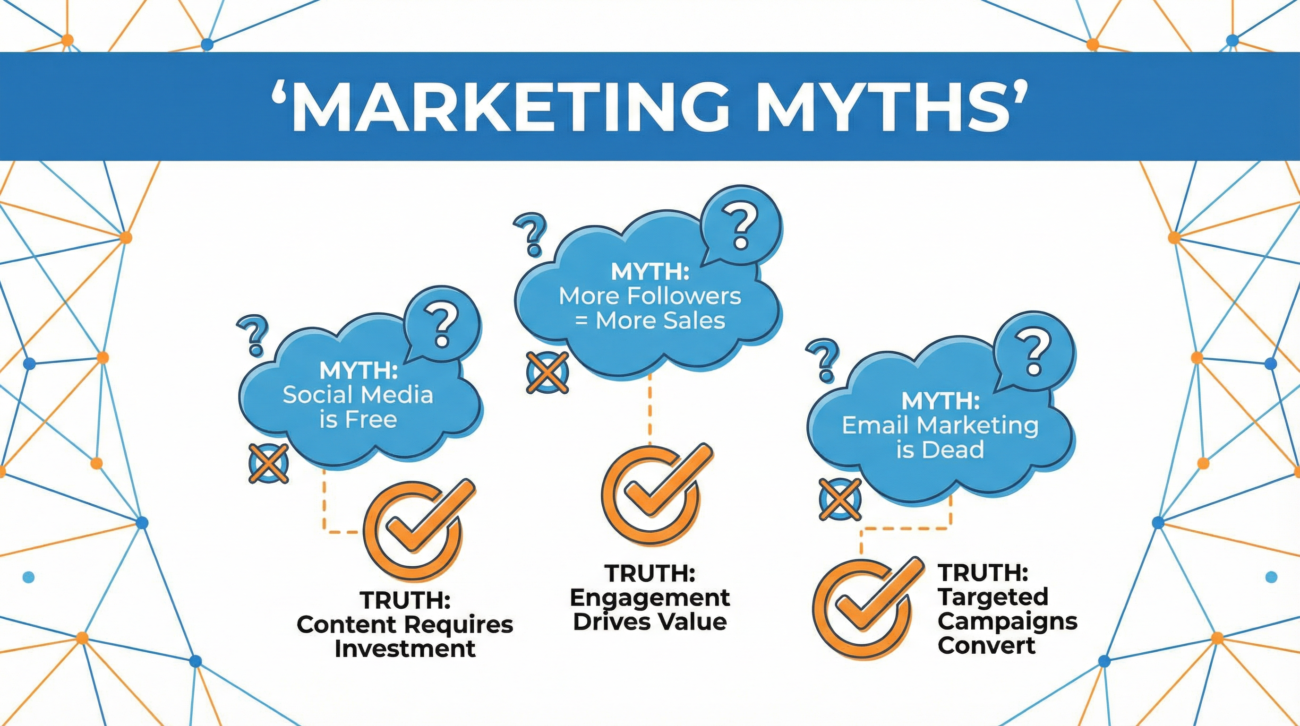
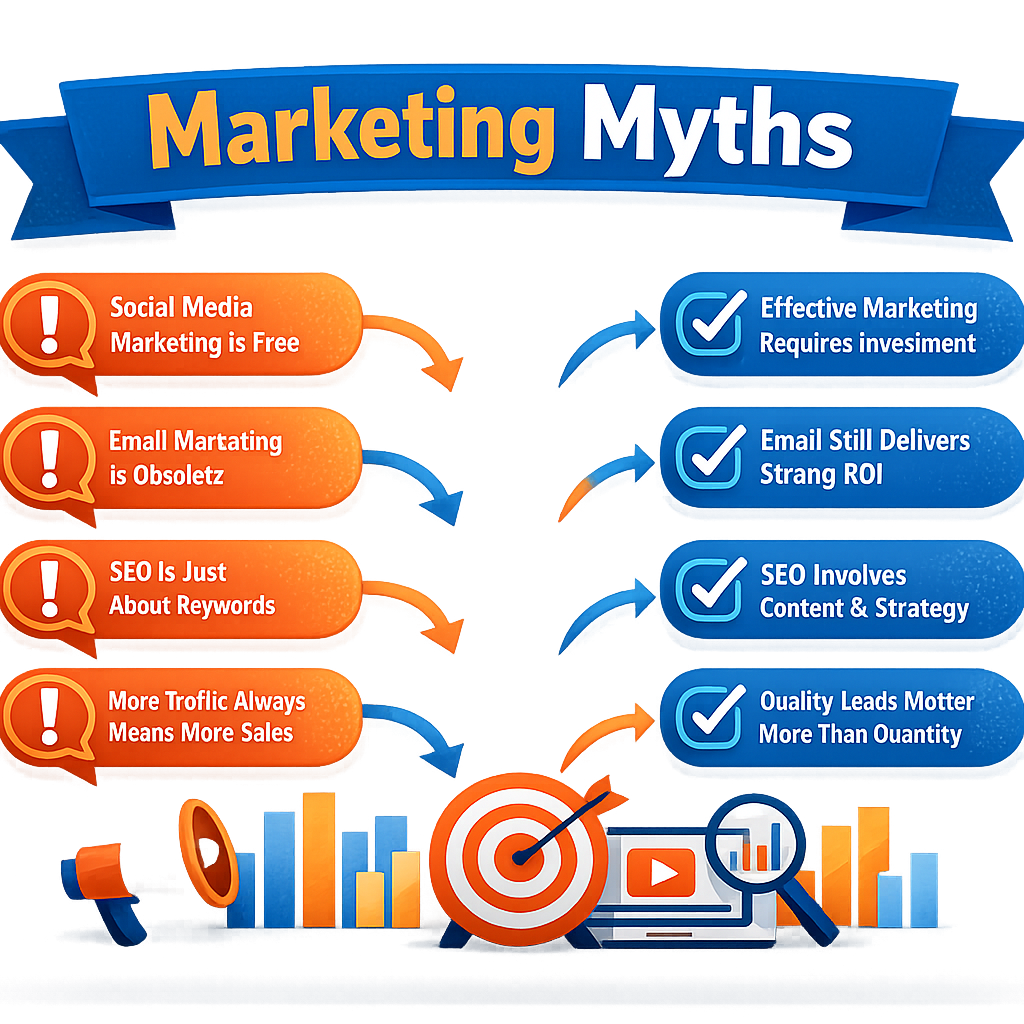
Infographic showing “Marketing Myths vs Marketing Reality”.
Myth 1: Marketing Is Only About Selling
One of the most common misunderstandings is that marketing is simply about convincing people to buy a product.
In reality, marketing is about creating value and building relationships with customers. Selling is only one part of the process.
Marketing includes:
* Market research
* Branding
* Customer experience
* Content creation
* Communication with customers
For example, companies like Apple do not rely solely on sales promotions. They build strong brand stories, design appealing products, and create emotional connections with their customers.
Instead of focusing only on sales, marketers should aim to:
* Understand customer needs
* Provide useful information
* Build long-term trust
Diagram showing the marketing process: Research → Branding → Awareness → Engagement → Sales → Loyalty.
Myth 2: Good Products Sell Themselves
Many beginners believe that if a product is excellent, customers will automatically discover and buy it.
Unfortunately, even great products can fail without proper marketing.
History offers many examples of innovative products that struggled because people simply did not know they existed.
A well-known example is the Segway personal transporter. When it launched in 2001, it was expected to revolutionize transportation. However, the company failed to clearly communicate its value to consumers and struggled with pricing and positioning.
On the other hand, many average products succeed because they are marketed effectively.
This shows that marketing is not optional. It is essential for visibility, communication, and brand positioning.
Suggested Visual:
Bar chart comparing “Product Quality vs Marketing Visibility”.
Myth 3: Marketing Delivers Instant Results
Many beginners expect marketing campaigns to generate immediate traffic, leads, and sales.
This myth is especially common in digital marketing, where people expect viral growth overnight.
The truth is that marketing takes time.
Activities like search engine optimization (SEO), content marketing, and brand building often require months before producing significant results.
For example, a blog may take six to twelve months before gaining steady organic traffic from search engines.
Successful companies understand this and focus on consistent efforts rather than quick wins.
Instead of expecting instant results, beginners should focus on:
* Long-term strategies
* Consistent content creation
* Continuous improvement
Line graph showing gradual growth in website traffic over time.
Myth 4: Social Media Alone Is Enough
Many new marketers believe that posting on social media platforms is the only marketing strategy they need.
While social media is powerful, it should not be the only channel used.
Effective marketing often includes multiple channels, such as:
* Search engine optimization
* Email marketing
* Paid advertising
* Content marketing
* Partnerships and collaborations
For example, a small online store that relies only on Instagram posts may struggle if the platform’s algorithm changes. However, if the business also builds an email list and invests in SEO, it will have more stable traffic sources.
Diversification helps protect businesses from sudden changes in platform policies or trends.
Marketing channel wheel showing social media, SEO, email, content, and ads.
Myth 5: More Traffic Means More Sales
Many beginners believe that increasing website traffic automatically leads to higher sales.
However, traffic alone does not guarantee conversions.
If the audience is not relevant or the website experience is poor, visitors will leave without purchasing anything.
For example, imagine an online store receiving 10,000 visitors from unrelated keywords. Most of these visitors will not be interested in the product.
Instead, marketers should focus on attracting the right audience and optimizing conversion rates.
Important factors include:
* Clear product descriptions
* Fast website loading speed
* Trust signals like reviews and testimonials
* Simple checkout processes
Funnel diagram showing Traffic → Leads → Customers.
Myth 6: Marketing Is Only for Large Companies
Another myth is that marketing requires huge budgets and is only effective for big brands.
While large companies may spend millions on advertising, small businesses can still succeed with creative and strategic marketing.
Many successful startups began with minimal budgets but strong ideas.
For example, Dropbox grew rapidly using a referral program that rewarded users with extra storage space for inviting friends. This simple strategy helped the company attract millions of users without massive advertising costs.
Small businesses can succeed by focusing on:
* Local marketing
* Community engagement
* High-quality content
* Word-of-mouth referrals
Case study infographic of Dropbox’s referral marketing model.
Myth 7: Marketing Is Purely Creative
Marketing often appears to be a creative field focused on catchy slogans, colorful ads, and clever campaigns.
While creativity is important, modern marketing is also highly analytical.
Data plays a major role in understanding customer behavior and improving campaigns.
Marketers regularly analyze metrics such as:
* Website traffic
* Conversion rates
* Customer acquisition cost
* Engagement rates
For example, email marketers often run A/B tests to determine which subject lines generate higher open rates.
Combining creativity with data helps marketers make better decisions and improve results.
Dashboard-style graphic showing marketing analytics metrics.
Myth 8: Once You Build a Brand, Marketing Is No Longer Needed
Some beginners assume that once a brand becomes popular, marketing efforts can stop.
However, even the most famous brands continue to invest heavily in marketing.
Companies like Coca-Cola, Nike, and Amazon spend billions on advertising every year despite already having global recognition.
Continuous marketing helps brands:
* Stay relevant
* Reach new audiences
* Launch new products
* Strengthen customer loyalty
Without consistent marketing, competitors can quickly capture attention and market share.
Timeline showing ongoing marketing campaigns for established brands.
Real-Life Example: A Small Business Learning the Truth About Marketing
Consider a small bakery that opens in a busy city neighborhood.
At first, the owner believes that delicious pastries alone will attract customers. However, after several months, sales remain low because few people know the bakery exists.
The owner then begins implementing marketing strategies such as:
* Creating a Google Business profile
* Posting behind-the-scenes baking videos on social media
* Offering loyalty cards to repeat customers
* Partnering with nearby coffee shops
Within a year, the bakery becomes a popular local destination.
This example shows that even excellent products need effective marketing to reach customers.
Suggested Visual:
Before-and-after comparison of bakery customer traffic.
Frequently Asked Questions (FAQs)
What is the biggest mistake beginners make in marketing?
One of the biggest mistakes is expecting quick results. Marketing success usually comes from consistent efforts over time rather than instant wins.
Do small businesses really need marketing?
Yes. Marketing helps businesses build awareness, attract customers, and compete in crowded markets. Even simple strategies can make a big difference.
Is digital marketing better than traditional marketing?
Both approaches can be effective depending on the target audience. Digital marketing offers measurable results and global reach, while traditional marketing can still work well for local businesses.
How long does it take to see marketing results?
The timeline varies depending on the strategy. Paid advertising can produce faster results, while SEO and content marketing may take several months to show significant growth.
Can beginners learn marketing without formal education?
Yes. Many successful marketers are self-taught. Online courses, books, and practical experience can help beginners develop strong marketing skills.
Conclusion
Marketing myths can create unrealistic expectations and lead beginners in the wrong direction. Believing that marketing is only about selling, that good products sell themselves, or that results appear instantly can cause frustration and wasted effort.
The truth is that effective marketing requires patience, strategy, and continuous learning. Successful marketers focus on understanding their audience, building relationships, analyzing data, and adapting to changing trends.
By avoiding these common myths and focusing on proven principles, beginners can develop smarter marketing strategies and achieve sustainable growth.
If you found this article helpful, consider exploring more marketing guides and resources on our website. Subscribe to stay updated with practical tips, insights, and strategies that will help you grow your business and improve your marketing skills.
External Links
https://nusenterprise.medium.com/5-common-myths-of-marketing-debunked-7f0ce0814454?utm
https://www.mystellaai.com/blog/20-common-marketing-myths-debunked?utm
https://www.sba.gov/blog/dont-get-fooled-these-7-marketing-myths?utm

One thought on “Common Marketing Myths That Mislead Beginners”