Introduction
Marketing has always been about connecting businesses with the right audience. For decades, companies relied heavily on traditional channels such as newspapers, television, billboards, and radio to reach potential customers. While these methods were effective for their time, they were often expensive and difficult to measure.
The rise of the internet and digital technology has transformed the way businesses communicate with customers. Today, marketing is faster, more targeted, more measurable, and more interactive than ever before. Companies can reach global audiences instantly, analyze customer behavior in real time, and personalize messages for specific groups.
In this article, we will explore how marketing has evolved in the digital era, the major changes that have shaped modern strategies, and what businesses can learn from these developments.
Understanding Traditional Marketing
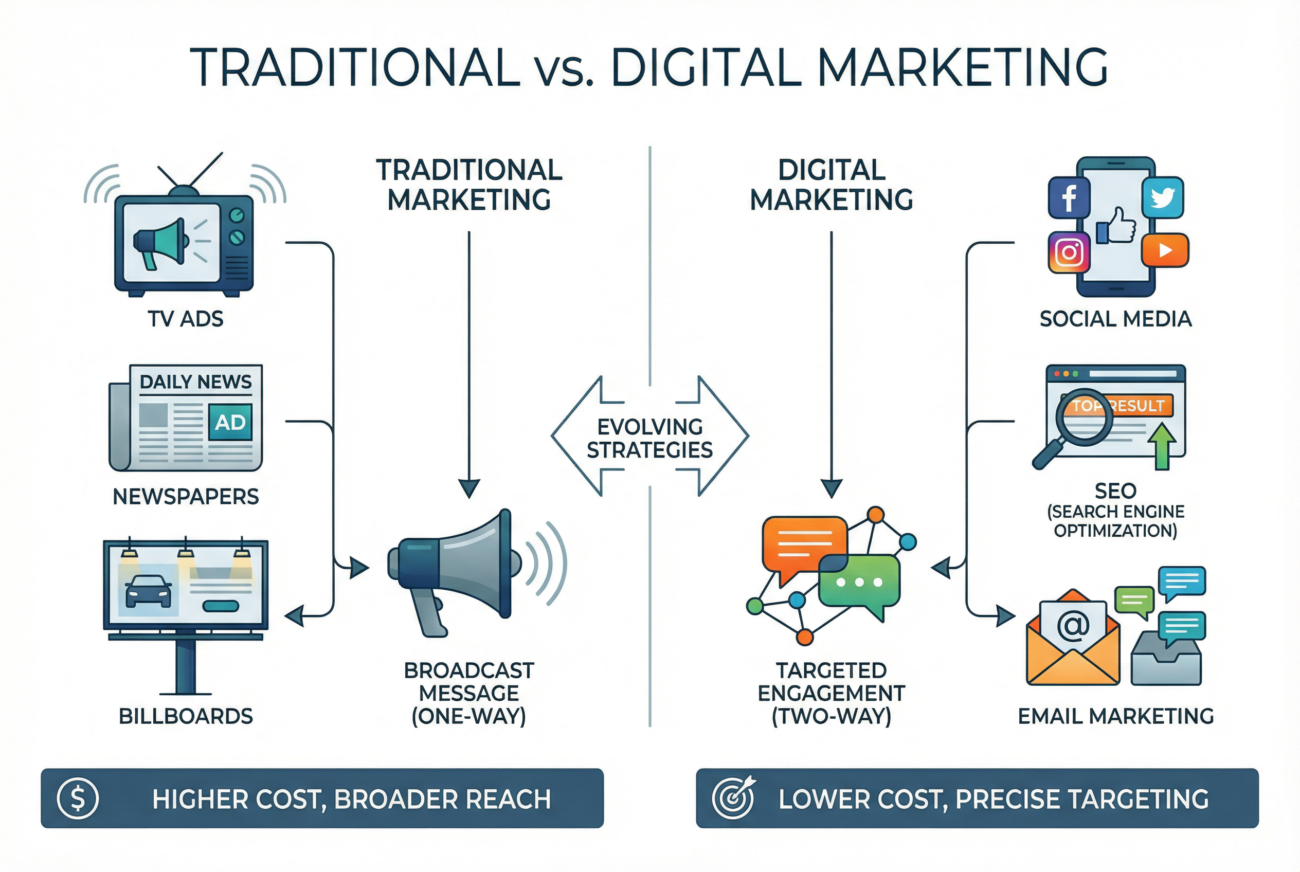
Before the digital revolution, marketing mainly focused on one-way communication. Businesses broadcast messages to large audiences through mass media.
Common traditional marketing channels included:
• Television advertisements
• Radio commercials
• Newspaper and magazine ads
• Direct mail
• Billboards and outdoor advertising
While these methods helped brands build awareness, they had several limitations:
• High costs
• Limited audience targeting
• Difficult performance measurement
• One-way communication with customers
For example, a company placing a television ad could reach millions of viewers, but it was nearly impossible to know exactly how many people became customers because of that ad.
The Shift to Digital Marketing
The digital era began changing marketing dramatically with the growth of the internet in the late 1990s and early 2000s. Businesses started building websites and experimenting with online advertising.
Today, digital marketing includes channels such as:
• Search engines
• Social media platforms
• Email marketing
• Content marketing
• Influencer marketing
• Mobile marketing
Unlike traditional marketing, digital marketing allows businesses to communicate directly with consumers and track results in detail.
Suggested Visual
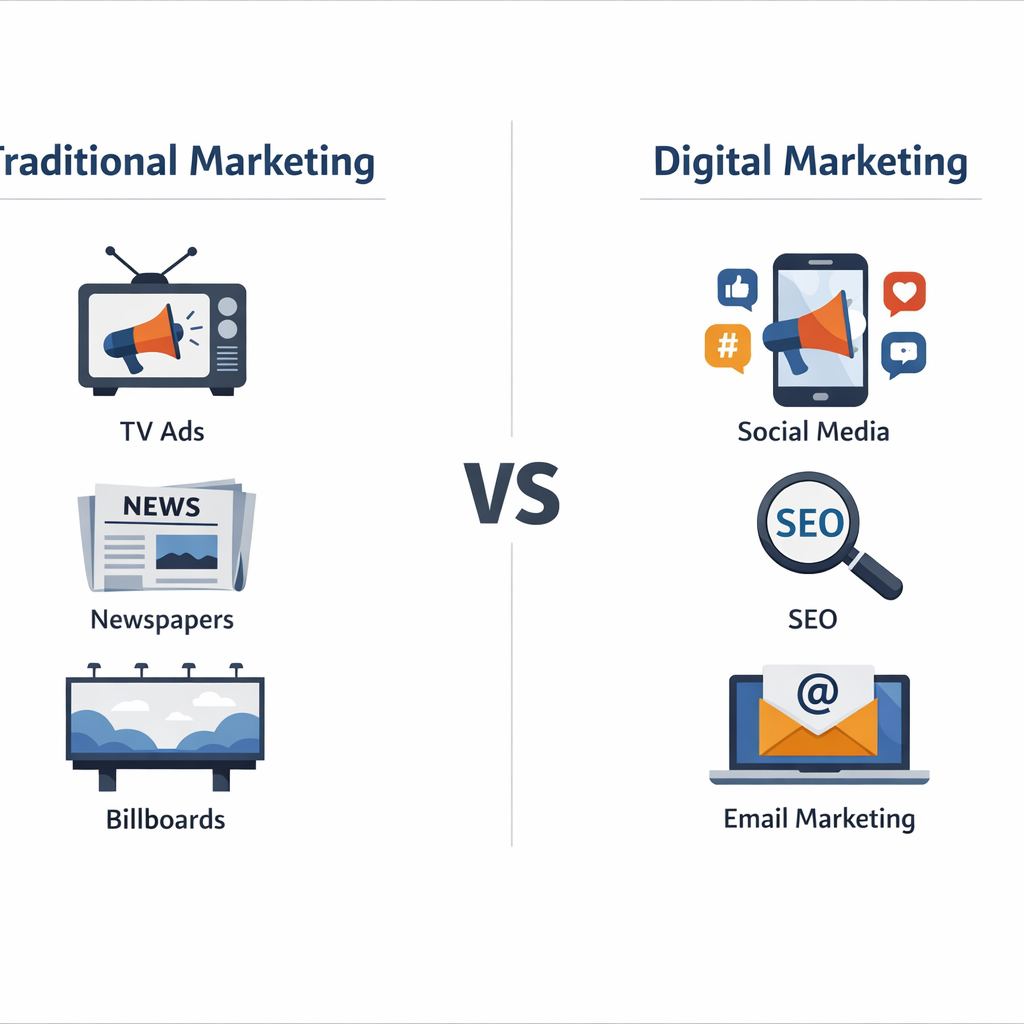
Infographic comparing traditional marketing vs digital marketing (cost, targeting, measurement, speed).
Data-Driven Marketing
One of the biggest changes in the digital era is the availability of data. Businesses can now collect and analyze information about customer behavior, preferences, and purchasing habits.
Tools like analytics platforms help marketers track:
• Website traffic
• User behavior
• Conversion rates
• Customer demographics
• Marketing campaign performance
For example, an online store can see exactly how many visitors came from social media, how long they stayed on the site, and which products they viewed before making a purchase.
Real-Life Example
An e-commerce company running a digital advertising campaign can track how many users clicked the ad, how many visited the website, and how many actually bought a product. This allows businesses to adjust campaigns quickly and improve results.
Chart showing the digital marketing funnel: Awareness → Interest → Consideration → Conversion.
The Rise of Social Media Marketing
Social media platforms have become one of the most powerful marketing tools in the digital age. Platforms like Facebook, Instagram, LinkedIn, and TikTok allow brands to communicate directly with audiences.
Social media marketing offers several benefits:
• Direct interaction with customers
• Real-time feedback
• Cost-effective advertising
• Viral marketing opportunities
Brands can post content, respond to comments, run advertisements, and build communities around their products or services.
A small clothing brand can post product photos on Instagram and reach thousands of potential customers without spending large amounts on advertising. With engaging content and consistent posting, even small businesses can compete with larger brands.
Content Marketing and Value Creation
Another major shift in the digital era is the focus on content marketing. Instead of simply promoting products, businesses now focus on providing useful, informative, or entertaining content.
Content marketing includes:
• Blog posts
• Educational articles
• Videos
• Podcasts
• Infographics
• Guides and tutorials
The goal is to attract audiences by offering valuable information rather than direct sales messages.
For example, a fitness brand might publish workout guides, nutrition tips, and training videos to build trust with its audience.
Many software companies publish free tutorials and guides that help users solve problems. Over time, readers trust the brand and are more likely to purchase the company’s products or services.
Personalization and Targeted Advertising
Digital marketing allows businesses to personalize their messages based on customer behavior.
Instead of sending the same advertisement to everyone, marketers can target specific groups based on:
• Age
• Location
• Interests
• Online behavior
• Purchase history
Personalization improves customer experience and increases the chances of conversion.
Online retailers often show product recommendations based on what customers previously viewed or purchased. This strategy increases the likelihood that users will find products they are interested in.
Flowchart showing personalized marketing based on user behavior data.
The Power of Search Engines
Search engines like Google have become central to modern marketing strategies. Search Engine Optimization (SEO) helps businesses appear in search results when users look for information, products, or services.
SEO focuses on:
• Keyword optimization
• Quality content creation
• Website performance
• Mobile friendliness
• Backlinks
When done correctly, SEO can drive consistent, long-term traffic to a website.
- A local restaurant optimizing its website for keywords like
- “best pizza near me”
- can attract customers
- who are actively searching for dining options in their area.
- Diagram showing how SEO connects search queries to website results.
Influencer Marketing and Digital Communities
In the digital era, influencers play a significant role in shaping consumer decisions. Influencers are individuals with large online followings who promote products or services to their audience.
Businesses collaborate with influencers because they offer:
• Trust and credibility
• Targeted audiences
• Authentic product promotion
A skincare brand partnering with a beauty influencer on YouTube or Instagram can reach thousands of viewers who trust the influencer’s recommendation.
Mobile Marketing and On-the-Go Consumers.
The rapid adoption of smartphones has created new marketing opportunities. Today, a large percentage of online traffic comes from mobile devices.
Mobile marketing strategies include:
• Mobile-friendly websites
• App-based marketing
• SMS campaigns
• Location-based advertising
Businesses must ensure that their digital content works smoothly on mobile devices to provide a positive user experience.
Food delivery apps often send promotional notifications during lunch or dinner hours, encouraging users to place orders
Challenges in the Digital Marketing Era
While digital marketing offers many advantages, it also presents new challenges.
Some common challenges include:
• High competition for online attention
• Rapid changes in algorithms
• Privacy regulations and data protection
• Content overload for audiences
Businesses must stay updated with new technologies and marketing trends to remain competitive.
FAQs
What is digital marketing?
Digital marketing refers to the promotion of products or services using online channels such as websites, search engines, social media, email, and mobile apps.
Why has digital marketing become so important?
Digital marketing allows businesses to reach global audiences, target specific customers, measure results accurately, and adjust campaigns quickly.
Is traditional marketing still relevant?
Yes. Traditional marketing can still be effective for brand awareness and local campaigns. However, many companies now combine traditional and digital strategies for better results.
How can small businesses benefit from digital marketing?
Digital marketing allows small businesses to compete with larger brands by using cost-effective strategies such as social media marketing, content marketing, and SEO.
What is the future of marketing?
The future of marketing will likely involve greater use of artificial intelligence, automation, data analytics, and personalized customer experiences.
Conclusion
Marketing has changed dramatically in the digital era. From traditional mass advertising to highly targeted online campaigns, businesses now have powerful tools to connect with audiences in more meaningful ways.
Key changes include the rise of data-driven marketing, social media engagement, content marketing, search engine optimization, influencer collaborations, and mobile-first strategies. These developments allow companies to understand customer behavior better and deliver more personalized experiences.
As technology continues to evolve, marketers must stay adaptable and focus on building genuine relationships with customers rather than simply promoting products.
Stay updated with the latest insights in digital marketing by subscribing to our newsletter and exploring more articles on our website.
External Links
https://www.thinkwithgoogle.com/marketing-strategies/

2 thoughts on “How Marketing Has Changed in the Digital Era”