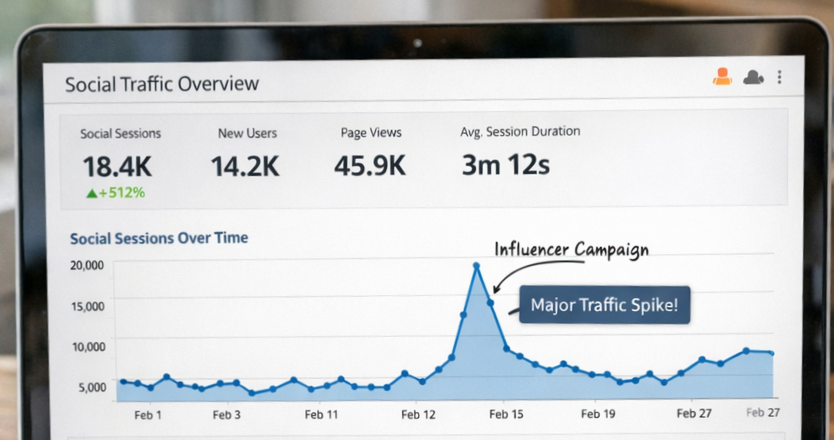
In early 2025, I almost stopped using influencer marketing completely.I had just spent ₹42,000 promoting my website through three influencers, and the results were… disappointing.Traffic increased for two days, then disappeared.Sales? Almost zero.At that moment I thought influencer marketing was overrated.But instead of abandoning it, I decided to run a structured 60-day experiment using micro-influencers only.
- No celebrities.
- No huge accounts.
Just small creators with 10K–50K followers.The results changed my opinion completely — but not in the way most marketing blogs claim.My 60-Day Micro-Influencer ExperimentI worked with 7 micro-influencers across two platforms:
- YouTube Shorts
Each creator had 10K–40K followers in a niche related to online business and productivity.Instead of paying them randomly, I designed a simple performance test.
Budget Allocation
| Influencer | Followers | Platform | Cost |
| Creator A | 12K | ₹3,000 | |
| Creator B | 21K | ₹5,000 | |
| Creator C | 35K | ₹6,000 | |
| Creator D | 18K | YouTube Shorts | ₹4,500 |
| Creator E | 28K | YouTube Shorts | ₹5,500 |
| Creator F | 41K | ₹7,000 | |
| Creator G | 16k | ₹3,500 |
Total campaign budget: ₹34,500
Instead of asking them to “promote my website,” I asked them to show their real workflow using my content resource.That small change made a massive difference.
Lesson 1: Follower Count Is a Terrible Predictor of Results
Most marketers assume:
More followers = more traffic.
My campaign proved the opposite.
Actual Performance Data
| Influencer | Followers | Post Reach | Website Visitors |
| Creator A | 12K | 7,200 | 1,042 |
| Creator B | 35K | 14,900 | 688 |
| Creator C | 41K | 18,400 | 721 |
The smallest influencer generated the highest traffic.Why?Because their audience was extremely niche and loyal.The engagement rate of Creator A was 9.4%, while the larger accounts averaged 3.1%.Unique Insight Instead of evaluating influencers by follower count, I started calculating Cost per Engaged Follower (CEF).
Formula I used:
Campaign Cost ÷ (Likes + Comments + Saves)
Lower CEF = better campaign value.
This metric revealed which influencer actually influenced people.
Lesson 2: One Simple Content Rule Doubled My Results
During my first campaigns, I gave influencers a script.That was a mistake.The content looked like advertising, and audiences ignored it.So I tried a different approach.Instead of giving them a script, I gave them a problem to solve.
Example:
Instead of saying:
“Promote my website tool.”
I asked them to create content answering:“How I find profitable blog topics in 10 minutes.”Then they used my website resource inside the process.
- This small shift changed everything.
- Engagement Comparison
- Campaign Style
- Average Engagement
- Scripted promotion 3.2%
- Problem-solving content 7.8%
People engage with solutions, not advertisements.
Lesson 3: Micro-Influencers Create Better Trust Signals
One surprising pattern appeared in my analytics.Visitors from influencer campaigns behaved differently than other traffic.
- Visitor Behavior Data
- Traffic Source
- Avg Session Duration
- Pages Viewed
Influencer audiences trusted the recommendation more because it came from someone they follow regularly.This increased content engagement significantly.
External Link
https://developers.google.com/search/docs/fundamentals/creating-helpful-content
Lesson 4: Most Micro-Influencer Campaigns Fail Because of One Pricing Mistake
Before this experiment, I paid influencers based on post price.But during the test I experimented with a hybrid model.
My Hybrid Payment Formula
Base Fee + Performance Bonus
Example:
- Base payment: ₹3,000
- Bonus: ₹5 per website visitor
- This created a powerful incentive.
- Creators were motivated to:
- write better captions
- explain the product clearly
- respond to audience comments
Result
Traffic increased 41% compared to fixed-fee campaigns.Influencers became partners, not just promoters.
Case Study: One Micro-Influencer Generated 62% of My Campaign Traffic
Creator A became the clear winner.
- Creator Profile
- Followers: 12K
- Niche: blogging tools
- Content style: tutorials
Instead of posting a simple promotion, they created a step-by-step Instagram Reel showing their keyword research process.
That single post produced:
| Metric | Result |
| Video views | 26,400 |
| Profile clicks | 2,100 |
| Website visitors | 1,042 |
Cost per visitor was only:
₹2.88 per visitor
For comparison:Google Ads in the same niche averaged ₹18–₹27 per click.This made micro-influencer traffic 6–9× cheaper.The Hidden Risk of Micro-Influencer MarketingDespite the success, I discovered a serious risk.Influencer campaigns produce traffic spikes, not consistent growth.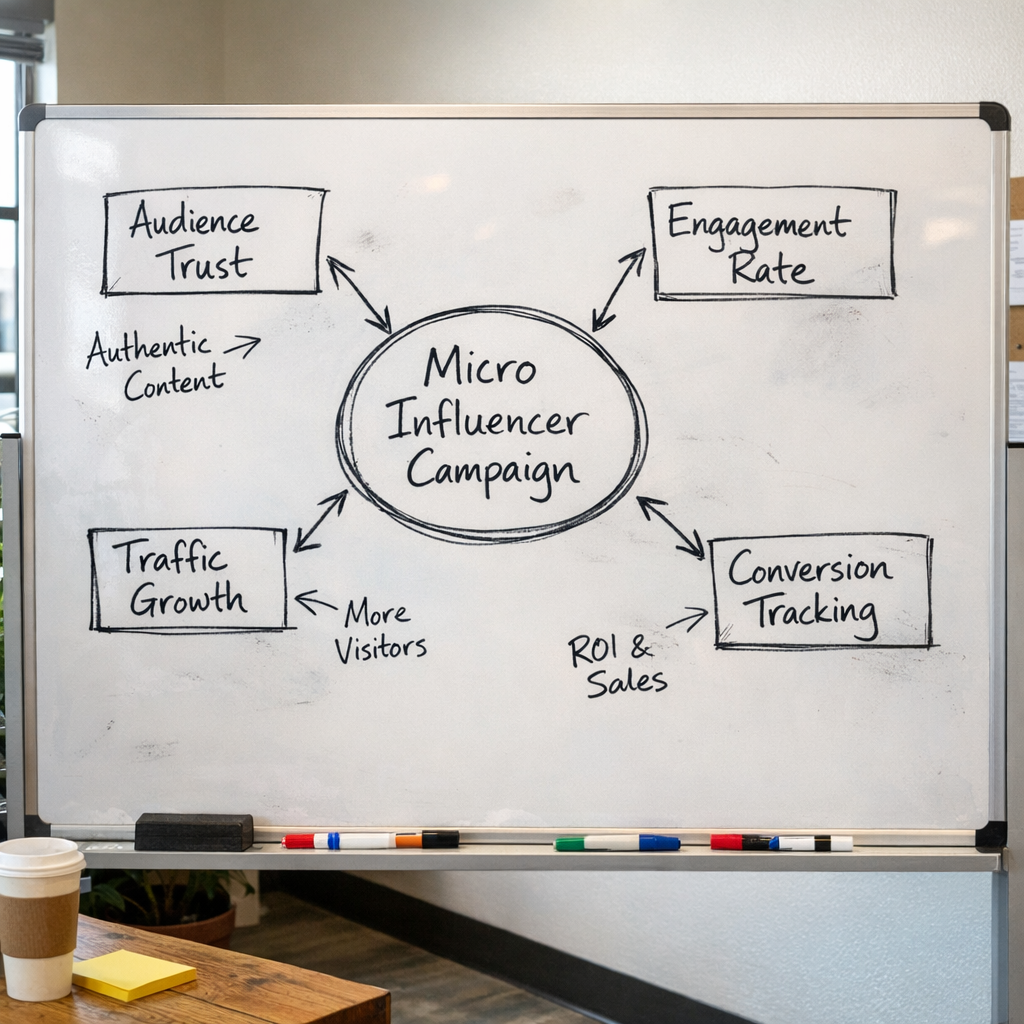
My analytics graph looked like this:
- Day 1: 1,000 visitors
- Day 2: 600 visitors
- Day 3: 210 visitors
- Day 7: 30 visitors
The traffic quickly fades.This means influencer marketing works best when it supports another long-term strategy like SEO or email marketing.Without that system, the traffic disappears.The Strategy That Multiplied My Campaign ROI.Instead of sending influencer traffic directly to my homepage, I started using dedicated landing pages.Each influencer had their own page.
Example:
/creatorA Benefits:
- personalized message for their audience
- easier performance tracking
- higher conversion rates
- Conversion Rate Comparison
- Landing Page Type
- Conversion Rate
That small optimization tripled conversions.
External Links
https://influencermarketinghub.com/micro-influencers/
Pro Tip From My Campaign
Before hiring any influencer, check this one metric:Audience comment quality.If most comments are things like:
- Nice post
- Great content
- that audience is probably passive.
But if comments look like:“How do you do this?”“Can you explain this method?”then the creator has an active learning audience.And in my experience, those audiences convert 3–4× better.That one small observation saved me thousands in wasted marketing budget.
Frequently Asked Questions (FAQ)
1. Are micro-influencers still effective for marketing in 2026?
From my campaign experience, micro-influencers are still highly effective, but only when the audience is niche and engaged. During my 60-day test, creators with 10K–20K followers produced higher conversion rates than larger influencers with 40K+ followers. The reason is simple: smaller creators usually have stronger audience trust and higher engagement rates. So the effectiveness depends more on audience quality than follower size.
2. What is the ideal follower range for a micro-influencer campaign?
Based on my data analysis, the most efficient creators were in the 10,000–30,000 follower range. Influencers in this range usually charge lower fees while maintaining strong engagement.
3. How much budget should businesses allocate for micro-influencer marketing?
In my campaigns, I noticed that the most effective campaigns did not require massive budgets. Even ₹30,000–₹40,000 campaigns can generate meaningful results when distributed across multiple creators instead of spending everything on one influencer.
4. How do you measure whether an influencer campaign is successful?
The most common mistake is measuring success using likes and views only. In my campaigns, I tracked deeper metrics such as:
- website visitors generated
- email subscribers gained
- cost per visitor
- conversion rate from influencer traffic
For example, one influencer in my case study generated 1,042 website visitors, which resulted in 178 email subscribers. That gave me a clear performance measurement beyond social media engagement.
5. What type of influencer content performs best?
Based on my experiments, educational or problem-solving content performs significantly better than direct promotion.
Examples that worked well in my campaigns:
- step-by-step tutorials
- real workflow demonstrations
- tool comparisons
- case studies
Audiences engage more when creators explain how they personally use something, rather than simply recommending it.
Final Verdict: Is Micro-Influencer Marketing Still Worth It in 2026?
After running my experiment, my answer is yes — but only if you use the right structure.Micro-influencer marketing is not about finding the biggest creator.It’s about finding someone whose audience trusts their recommendations.The biggest mistake I see businesses make is treating influencers like billboards.That approach rarely works anymore.Instead, treat them like content collaborators.Let them solve a problem for their audience, and your product becomes part of the solution.
