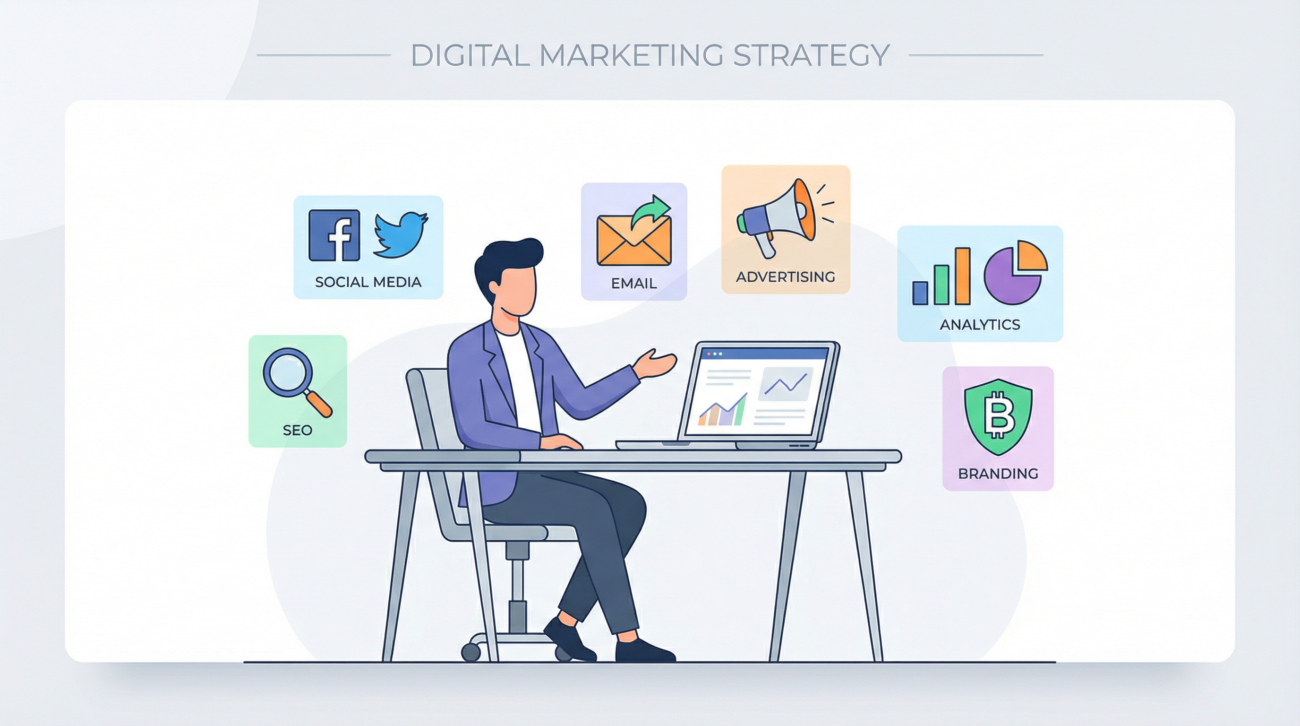
Marketing is one of the most important activities in any business, yet it is often misunderstood. Many people assume marketing simply means advertising or promoting products. In reality, marketing is a much broader concept that involves understanding customer needs, creating value, and communicating that value effectively.
Every successful business—from small local shops to global corporations—relies on marketing to reach customers and grow. Without marketing, even the best product or service may remain unknown to potential buyers.
In today’s competitive and digital-first world, marketing has become even more essential. Businesses must compete not only on product quality and price but also on brand perception, customer experience, and communication.
This article explains what marketing is, why it matters for businesses, how it works in practice, and what challenges companies must consider when developing marketing strategies.

Background or Context
Marketing has evolved significantly over time. In the early days of commerce, businesses focused mainly on production and sales. If a company produced goods efficiently, it was usually enough to succeed.
However, as markets became more competitive, businesses realized that simply producing products was not enough. Companies needed to understand what customers actually wanted and how to reach them effectively.
This shift led to the development of modern marketing principles. Businesses began studying consumer behavior, analyzing market demand, and building strong brand identities.
The digital revolution has further transformed marketing. Today, companies use websites, social media, search engines, and data analytics to connect with customers in more personalized ways.
Consumers also have greater control than ever before. They can research products, read reviews, compare prices, and interact with brands online. As a result, businesses must adopt smarter and more customer-focused marketing strategies.
Key Analysis or Explanation
What Is Marketing?
Marketing refers to the process of identifying customer needs, creating products or services that satisfy those needs, and communicating their value to the target audience.
In simple terms, marketing helps businesses answer three key questions:
* Who are our customers?
* What problems do they want to solve?
* How can we communicate our solution effectively?
Marketing includes many activities such as market research, product development, pricing strategy, branding, advertising, customer engagement, and distribution.
The goal is not just to sell products but to create long-term relationships with customers.
The Core Elements of Marketing (The 4 Ps)
A widely used framework in marketing is the **4 Ps**: Product, Price, Place, and Promotion.
**Product** refers to the item or service being offered. Businesses must ensure their product solves a real problem or meets a genuine need.
**Price** determines how much customers pay. Pricing strategies depend on factors such as production cost, competition, and perceived value.
**Place** refers to distribution—how and where customers can access the product. This may include physical stores, online platforms, or direct sales.
**Promotion** involves communicating with customers through advertising, public relations, content marketing, and other promotional methods.
Together, these elements form the foundation of most marketing strategies.
Understanding Customer Needs
Effective marketing starts with understanding the customer.
Businesses conduct market research to gather insights about consumer preferences, buying behavior, and pain points. This information helps companies design products and messages that resonate with their audience.
For example, a company selling fitness equipment might discover that many customers want compact home workout tools. Based on this insight, they can design smaller, affordable equipment specifically for home use.
Understanding customer needs helps businesses reduce risk and improve product success.
Branding and Positioning
Branding is another important part of marketing. A brand represents how customers perceive a company or product.
Strong brands create trust and recognition. When customers see a familiar brand name or logo, they immediately associate it with certain qualities such as reliability, innovation, or affordability.
Positioning refers to how a brand differentiates itself from competitors.
For example, some companies position themselves as premium brands with high-quality products, while others focus on affordability and accessibility.
Clear positioning helps businesses stand out in crowded markets.
Digital Marketing in the Modern Economy
Digital marketing has become one of the most important aspects of modern business strategy.
Common digital marketing channels include:
- Search engine marketing
- Social media marketing
- Email marketing
- Content marketing
- Influencer partnerships
These channels allow businesses to reach global audiences at relatively low cost compared to traditional advertising.
Digital platforms also provide valuable data. Businesses can track customer behavior, measure campaign performance, and refine strategies based on real-time insights.
This data-driven approach has made marketing more precise and measurable than ever before.
Customer Retention and Loyalty
Marketing is not only about attracting new customers. It also plays a major role in keeping existing customers engaged.
Customer retention strategies include:
- Loyalty programs
- Personalized communication
- Quality customer service
- Regular product updates
Research consistently shows that retaining existing customers is often more cost-effective than acquiring new ones.
Businesses that invest in customer relationships often achieve stronger long-term growth.
Risks and Considerations
While marketing offers many benefits, businesses must also consider certain challenges and risks.
High Competition
Many industries are saturated with competing brands. Standing out requires creativity, consistent messaging, and strong customer understanding.
Changing Consumer Behavior
Customer preferences can change quickly due to technological trends, cultural shifts, or economic conditions. Marketing strategies must adapt accordingly.
Marketing Costs
Advertising campaigns, digital tools, and market research can be expensive. Businesses must carefully evaluate the return on investment of their marketing activities.
Ethical and Privacy Concerns
Data-driven marketing relies heavily on consumer information. Companies must respect privacy regulations and use data responsibly.
Failure to do so can damage brand reputation and lead to legal consequences.
Visual and Multimedia Suggestions
Visual content can greatly improve reader understanding of marketing concepts. The following visuals would enhance this article:
**1. Marketing Funnel Diagram**
A visual showing the stages from awareness to consideration, conversion, and customer loyalty.
**2. The 4 Ps of Marketing Infographic**
A simple infographic illustrating Product, Price, Place, and Promotion.
**3. Customer Journey Map**
A visual explaining how customers move from discovering a brand to becoming loyal customers.
**4. Digital Marketing Channels Chart**
A chart showing the major digital marketing channels and their typical uses.
**5. Case Study Video**
A short video explaining how a successful brand used marketing strategy to grow its customer base.
Internal and External Links
Suggested Internal Articles
If this article appears on a business or marketing blog, the following related topics would be useful internal links:
- Beginner’s Guide to Digital Marketing
- What Is Brand Strategy?
- How Small Businesses Can Use Social Media Marketing
- Understanding Customer Behavior in Modern Markets
- The Basics of Market Research
Recommended External Sources
Readers may also explore these trusted resources:
* Harvard Business Review (for marketing strategy insights)
- *HubSpot Marketing Blog (for digital marketing education)
- * Google Digital Garage (for free marketing courses)
- * American Marketing Association (for professional marketing research)
These sources provide credible information for readers who want to explore marketing in greater depth.
FAQ Section
1. What is the main purpose of marketing?
The primary purpose of marketing is to connect businesses with customers in a way that creates value for both sides.
Marketing helps businesses understand what customers need, develop products that meet those needs, and communicate their benefits effectively. For example, a company producing eco-friendly packaging must inform environmentally conscious consumers about its sustainability benefits.
Without marketing, customers may never learn about the product or understand why it matters.
2. How is marketing different from sales?
Although marketing and sales are closely related, they serve different roles.
Marketing focuses on attracting and engaging potential customers. It builds awareness, interest, and trust in a brand or product.
Sales, on the other hand, involves converting interested prospects into paying customers.
For instance, a marketing campaign might generate leads through social media advertising, while the sales team contacts those leads and completes the purchase process.
Both functions must work together for business success.
3. Why is marketing important for small businesses?
Small businesses often face limited visibility and strong competition. Marketing helps them reach potential customers and build brand awareness.
For example, a local bakery can use social media marketing to showcase its products, attract nearby customers, and promote special offers.
Even simple marketing strategies such as customer reviews, local advertising, and community engagement can significantly improve a small business’s growth prospects.
4. What are some common types of marketing?
There are many types of marketing used by businesses today.
Some common examples include:
- Digital marketing
- Content marketing
- Social media marketing
- Email marketing
- Influencer marketing
- Traditional advertising
Each type serves different purposes depending on the business goals, target audience, and available resources.
Successful marketing strategies often combine several approaches.
5. How can businesses measure marketing success?
Businesses evaluate marketing performance using key metrics such as:
- Website traffic
- Conversion rates
- Customer acquisition cost
- Return on marketing investment
- Customer lifetime value
For example, an online retailer might track how many visitors from a social media campaign actually make purchases.
These measurements help businesses determine whether their marketing efforts are effective and where improvements are needed.
6. Can a business succeed without marketing?
In rare cases, businesses may grow through word-of-mouth alone, especially if they offer a highly unique product.
However, most companies need marketing to expand beyond a small customer base.
Without marketing, businesses struggle to build brand awareness, communicate value, and compete effectively in crowded markets.
Even basic marketing activities—such as maintaining an online presence or encouraging customer reviews—can make a significant difference.
Conclusion
Marketing is far more than advertising or promotion. It is a comprehensive process that helps businesses understand customers, create valuable products, and communicate effectively with the market.
In an increasingly competitive and digital business environment, marketing plays a central role in business success. It helps companies attract customers, build strong brands, and maintain long-term relationships.
However, effective marketing requires careful planning, ethical practices, and continuous adaptation to changing market conditions.
Businesses that invest in understanding their audience and delivering genuine value are more likely to build lasting customer trust and sustainable growth.
External Links
https://learndigital.withgoogle.com/digitalgarage

3 thoughts on “What Is Marketing and Why Every Business Needs It”