Introduction
Every business, regardless of size or industry, faces a common challenge: acquiring new customers is often expensive, and retaining them can be even more crucial for long-term growth. While attracting first-time buyers is an important milestone, converting them into loyal, repeat customers provides sustained revenue, positive word-of-mouth, and a competitive advantage.
In this article, we will explore the strategies and techniques businesses use to nurture first-time customers into loyal audiences. You will learn the underlying principles, practical approaches, and potential pitfalls to be aware of, helping you understand how customer loyalty is built systematically rather than left to chance.
Context
Customer loyalty has long been recognized as a key driver of business success. Studies indicate that acquiring a new customer can cost five times more than retaining an existing one. Furthermore, loyal customers are more likely to make larger purchases and recommend a brand to friends or colleagues.
In the digital era, businesses face both opportunities and challenges in loyalty building. Online platforms allow personalized marketing and seamless communication, yet the abundance of choices means customers can easily switch brands. This environment makes turning first-time buyers into repeat customers more critical than ever.
Understanding customer behavior, creating meaningful engagement, and building trust are foundational to developing a loyal customer base. These factors set the stage for strategic actions that encourage repeat interactions.
Key Analysis: How Businesses Foster Loyalty
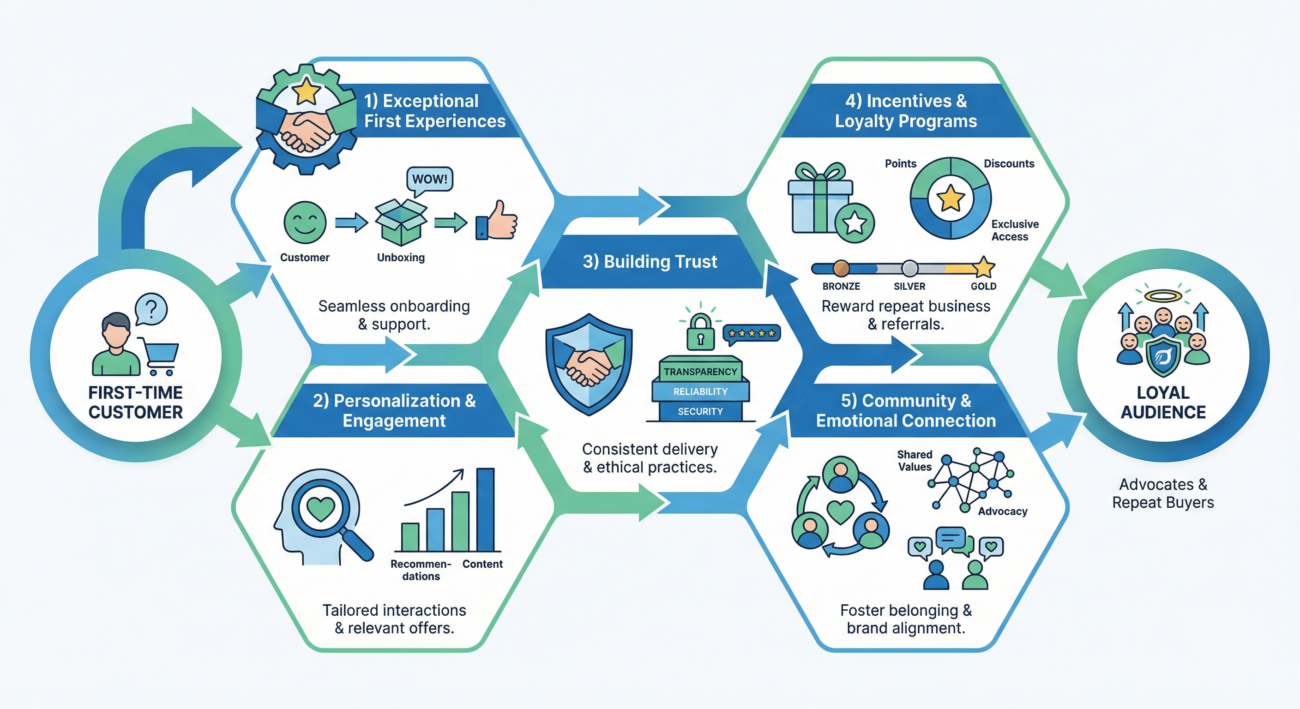
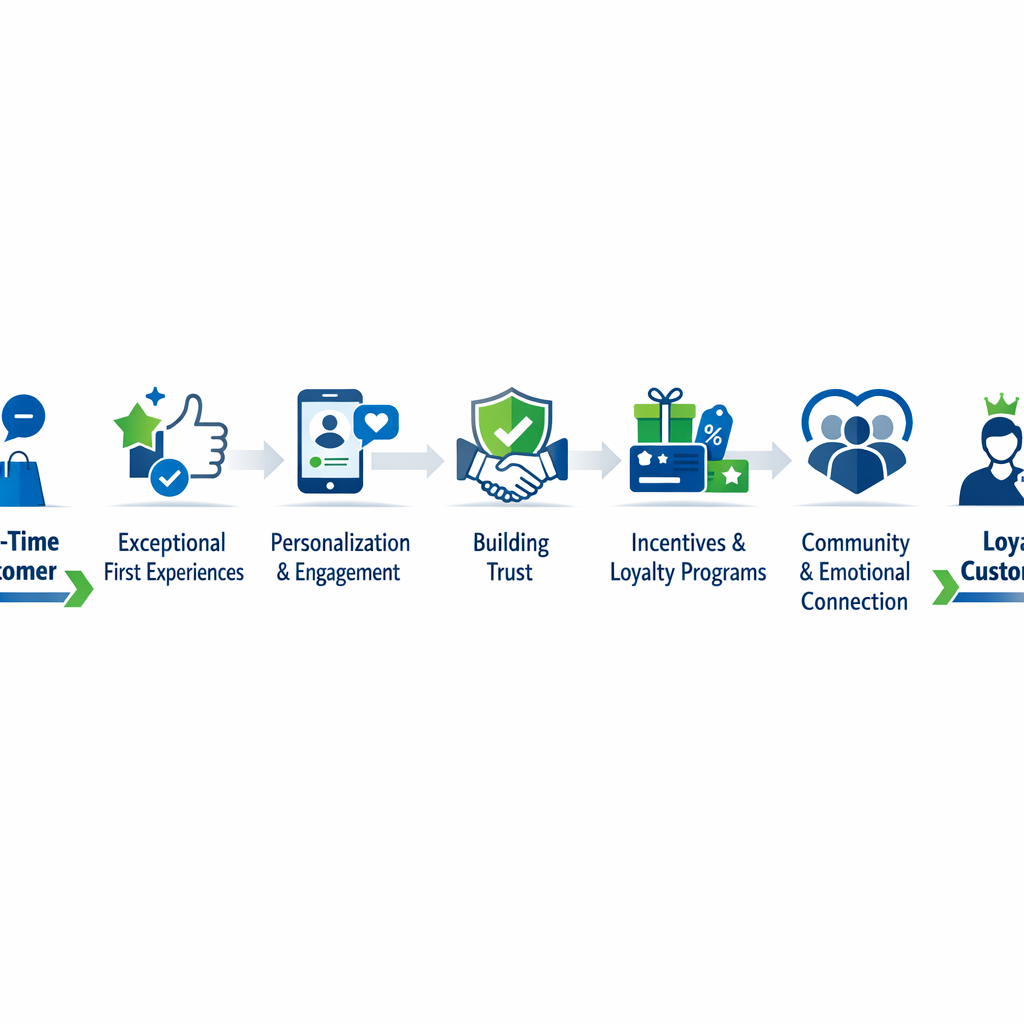
1. Providing Exceptional First Experiences
First impressions matter. The initial interaction a customer has with a brand shapes their perception and influences whether they return.
**Example:** A coffee shop offering a personalized welcome, complimentary samples, or friendly service leaves a lasting impression. Similarly, e-commerce platforms like Amazon prioritize smooth onboarding, easy navigation, and clear product descriptions to ensure a positive first experience.
Practical takeaway: Ensure every touchpoint—from purchase to delivery—is seamless, professional, and enjoyable. Small gestures, such as personalized thank-you notes or quick responses to queries, can significantly enhance customer satisfaction.
2. Personalization and Customer Engagement
Modern consumers expect brands to understand their preferences and offer relevant experiences. Personalization can include targeted recommendations, custom content, or exclusive offers.
**Example:** Streaming platforms such as Netflix and Spotify track user preferences to suggest relevant content, increasing engagement and encouraging repeat visits. Retail brands often use past purchase data to offer personalized discounts or product suggestions.
Practical takeaway: Collect and analyze customer data responsibly to tailor communications. Email campaigns, app notifications, and loyalty programs can all benefit from this targeted approach, fostering a sense of recognition and value.
3. Building Trust and Transparency
Trust is a cornerstone of customer loyalty. Brands that communicate openly, provide accurate information, and resolve issues promptly are more likely to retain customers.
**Example:** A software company providing clear instructions, transparent pricing, and responsive support builds credibility. When problems arise, prompt resolution and acknowledgment of mistakes help maintain customer confidence.
Practical takeaway: Establish clear policies, offer honest communication, and be proactive in addressing concerns. Customers are more likely to stay loyal when they feel respected and valued.
4. Incentives and Loyalty Programs
Rewarding repeat behavior encourages ongoing engagement. Loyalty programs can be point-based, tiered, or offer exclusive benefits that create tangible reasons to return.
**Example:** Airlines’ frequent flyer programs reward regular travelers with points, upgrades, and access to premium services. Retail brands like Sephora provide tiered rewards for repeat purchases, motivating continued patronage.
Practical takeaway: Design loyalty programs that align with customer interests and deliver real value. Avoid overly complicated systems that confuse or frustrate participants.
5. Community and Emotional Connection
Customers often remain loyal when they feel part of a community or connected to a brand’s values. Emotional engagement goes beyond transactional relationships.
**Example:** Outdoor brands like Patagonia foster loyalty by aligning with environmental causes, creating communities around shared values. Customers feel they are supporting something meaningful, not just making a purchase.
Practical takeaway: Highlight your brand’s mission, encourage community involvement, and engage customers in storytelling. Authenticity is key; forced narratives rarely resonate.
Risks and Considerations
While building loyalty has clear benefits, businesses must navigate several risks and challenges:
* **Overpromising and Under-delivering:** Failing to meet expectations set during the first interaction can erode trust and deter repeat purchases.
* **Neglecting Existing Customers:** Focusing too heavily on acquisition may result in ignoring loyal customers, undermining retention.
* **Data Privacy Concerns:** Personalization requires careful handling of customer data. Mishandling can damage reputation and result in legal penalties.
* **Program Fatigue:** Complex loyalty programs or excessive promotional messaging can overwhelm customers, reducing engagement instead of enhancing it.
Recognizing these risks allows businesses to implement strategies thoughtfully, balancing customer acquisition with retention and ethical practices.
External Links and Resources
For readers interested in exploring this topic further:
* **Harvard Business Review:** [The Value of Customer Experience, Quantified](https://hbr.org/2014/08/the-value-of-customer-experience-quantified) – Insights into how experience influences loyalty.
* **Forbes:** [How Loyalty Programs Drive Repeat Business](https://www.forbes.com/sites/forbestechcouncil/2021/03/25/how-loyalty-programs-drive-repeat-business/) – Analysis of effective rewards programs.
FAQ Section
**1. Why is converting first-time customers into loyal customers important?**
Retaining customers reduces marketing costs, increases revenue through repeat purchases, and encourages positive referrals. For instance, a single loyal customer may spend 20–40% more over time than a new customer.
**2. What is the role of personalization in customer loyalty?**
Personalization helps customers feel recognized and valued. Tailoring offers, content, or recommendations based on their preferences encourages repeat engagement and fosters a sense of connection with the brand.
**3. How can small businesses compete with large companies in building loyalty?**
Small businesses can leverage personal relationships, exceptional customer service, and niche communities. Direct engagement and authentic storytelling often create stronger emotional connections than large-scale promotions.
**4. Are loyalty programs always effective?**
Not always. Programs must offer real value and be simple to understand. Overly complicated or irrelevant rewards can discourage participation, while meaningful incentives can strengthen loyalty effectively.
**5. How does trust impact customer retention?**
Trust is crucial. Transparent communication, reliable service, and ethical practices encourage repeat interactions. Brands that mishandle issues or provide inconsistent experiences risk losing customers permanently.
**6. Can emotional engagement outweigh price competition?**
Yes. Brands that resonate with customers’ values or create a sense of community often maintain loyalty even if competitors offer lower prices. Emotional connections foster brand advocacy beyond mere transactions.
Conclusion
Turning first-time customers into loyal audiences requires a combination of strategy, consistency, and genuine engagement. Businesses that focus on creating exceptional initial experiences, personalizing interactions, building trust, offering meaningful incentives, and fostering emotional connections are more likely to retain customers and cultivate long-term loyalty.
While challenges such as program fatigue, data privacy, and overpromising exist, careful planning and thoughtful execution can mitigate these risks. Ultimately, customer loyalty is built not through a single tactic but through an ongoing commitment to understanding, satisfying, and valuing each customer. By prioritizing retention alongside acquisition, businesses can achieve sustainable growth and establish lasting relationships in an increasingly competitive marketplace.
