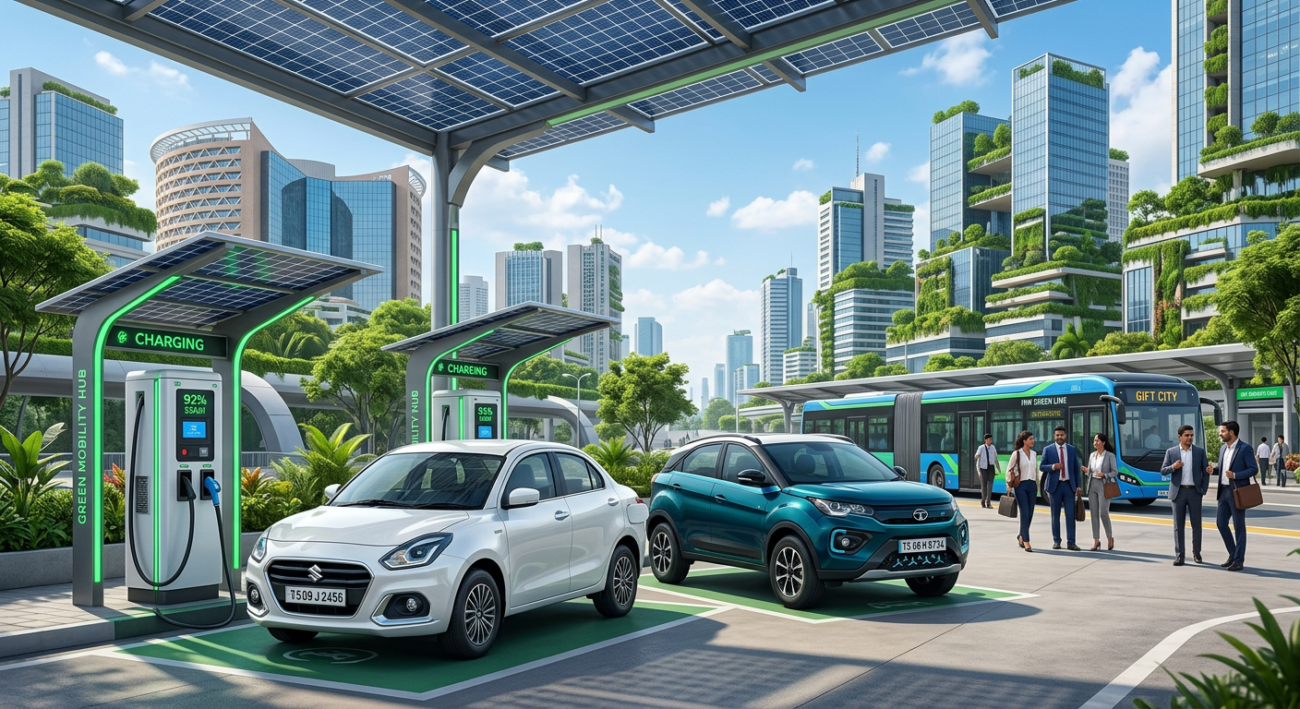
The Rs. 16.6 Lakh Crore Charge: India’s Definitive Blueprint for an Electric Vehicle Revolution
India stands at a pivotal crossroads in its automotive history. As the world moves toward a decarbonized future, the Indian government, in collaboration with private giants, has unveiled an audacious “Grand Plan.” With a projected investment of approximately Rs. 16.6 Lakh Crore over the coming decade, the focus is shifting from simple EV adoption to the construction of a robust, world-class EV infrastructure. This isn’t just about changing cars; it’s about reimagining how a billion people move.
1. The Vision Behind the Rs. 16.6 Lakh Crore Investment
The scale of this investment is unprecedented. To put it in perspective, this capital infusion aims to bridge the gap between “range anxiety” and “range confidence.” The primary goal is to ensure that by 2030, EV sales reach 30% for private cars, 70% for commercial vehicles, and 80% for two and three-wheelers. The Rs. 16.6 Lakh Crore roadmap covers everything from grid upgrades and high-speed charging corridors to indigenous battery manufacturing via PLI schemes.
2. Infrastructure Comparison: Current vs. Future Goals
| Infrastructure Component | Status (2024) | 2030 Projection | Primary Funding Source | Key Challenge |
|---|---|---|---|---|
| Public Charging Stations | ~12,000 | 1.3 Million+ | PPP Model & Govt Subsidies | Land Acquisition |
| Battery Giga-factories | Nascent / Importing | 50GWh+ Capacity | PLI Scheme / Private Sector | Raw Material Supply |
| EV Highway Corridors | Selected NHs | All Major National Highways | NHAI & MoRTH | Grid Connectivity |
| Renewable Energy Mix | ~42% | 50%+ for EV Charging | Green Energy Corridor | Storage Intermittency |
| Last-Mile Logistics | 20% Electric | 85%+ Electric | Corporate ESG Mandates | Vehicle Financing |
The real “gold rush” in the Rs. 16.6 Lakh Crore plan isn’t just in manufacturing vehicles; it’s in the auxiliary services. Look into “Battery as a Service” (BaaS) and smart-grid software integration. These sectors are expected to see a CAGR of 35% as the infrastructure matures.
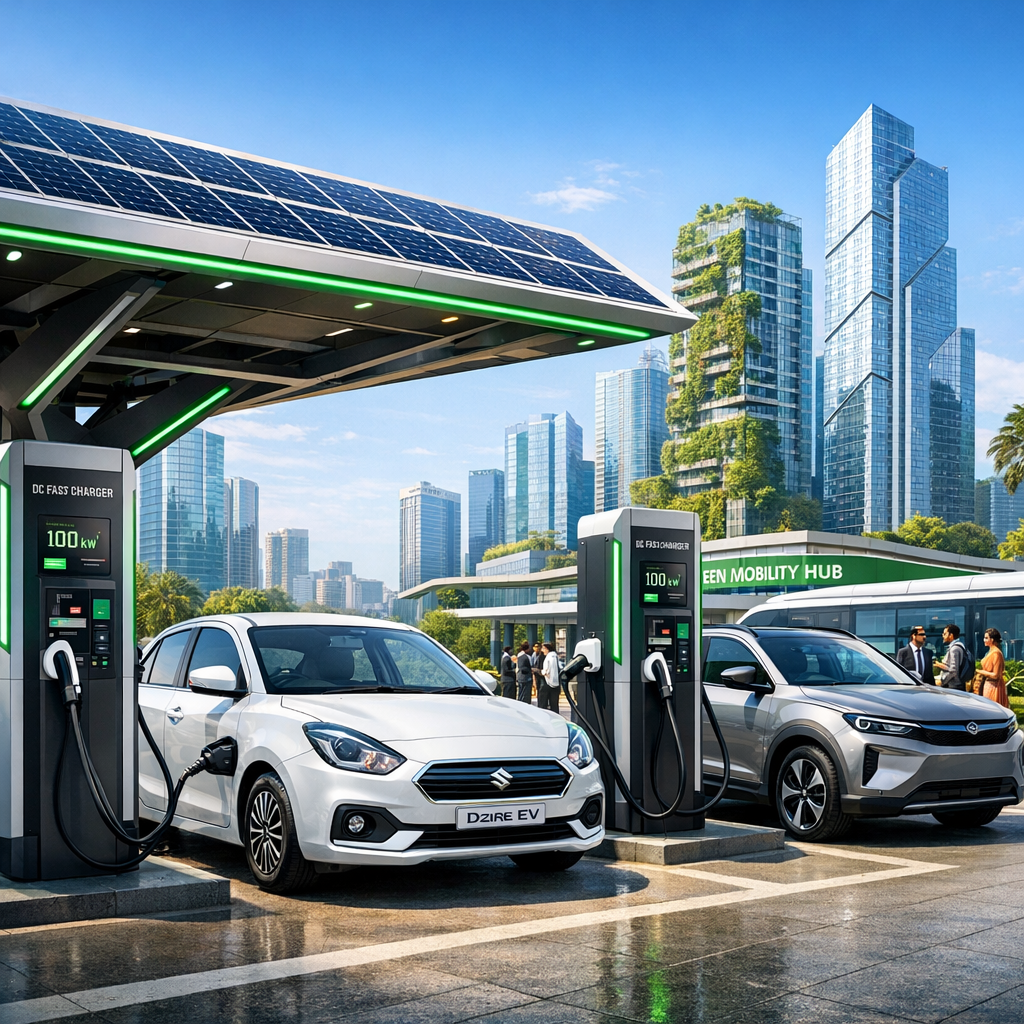
3. 10 Critical Pillars of India’s EV Infrastructure Plan
I. The National Electric Mobility Mission Plan (NEMMP)
This serves as the foundational policy. The government is focusing on creating a demand-supply equilibrium. By providing upfront incentives for vehicle purchases, they are forcing the hand of infrastructure providers to accelerate station deployments.
II. Phase II of FAME (Faster Adoption and Manufacturing of EVs)
FAME-II has been instrumental in subsidizing public transport. A significant chunk of the 16.6 Lakh Crore budget is directed toward electrifying state transport buses, which acts as a catalyst for high-capacity charging depot installations.
III. Development of Green Energy Corridors
There is no point in driving an EV if it is powered by coal. The infrastructure plan integrates the EV grid with solar and wind farms, ensuring that the “well-to-wheel” emissions are significantly lowered.
IV. Setting Up Giga-Factories
To reduce dependency on imports (especially from China), the PLI scheme for Advanced Chemistry Cell (ACC) battery storage is a cornerstone. Localized production will drop battery prices by an estimated 40%.
V. Smart Grid Integration (V2G)
Vehicle-to-Grid (V2G) technology is being tested in urban hubs like Delhi and Bengaluru. This allows parked EVs to feed power back into the grid during peak demand, essentially turning cars into mobile power banks.
VI. Standardized Charging Protocols
India is moving toward a unified charging standard (CCS2 and Type 2) to ensure that a Tata user can charge at a Mahindra or Tesla station without compatibility issues. This interoperability is key to consumer trust.
VII. Urban Micro-Mobility Hubs
The plan allocates funds for “EV-only” zones in metro cities. These zones will feature high-density slow-charging spots for two-wheelers and delivery fleets, reducing urban noise and air pollution.
VIII. Skilled Workforce Development
A portion of the investment is reserved for “re-skilling.” As internal combustion engines (ICE) fade, thousands of mechanics and engineers are being trained in high-voltage electric systems and software-defined vehicle architectures.
IX. Battery Swapping Policy
For the 2-wheeler and 3-wheeler segments, waiting 45 minutes for a electric charge isn’t viable for delivery partners. A standardized battery swapping policy is being rolled out to allow 30-second “refuels.”
X. Incentivizing Private Charging at Workplaces
The government is considering mandates for new commercial buildings to reserve 20% of parking spaces for EV electric charging. This “charge while you work” philosophy reduces the load on public fast-chargers.
EV Readiness Checklist for Fleet Owners & Consumers
- Evaluate your daily mileage (EVs are most cost-effective above 40km/day).
- Check for existing 15A electric socket availability in your permanent parking.
- Research State-specific EV subsidies (e.g., Delhi and Gujarat offer extra perks).
- Verify the “Real-World Range” vs. the “Certified Range” of your target model.
- Install a dedicated fire-safety circuit for home charging setups.
4. The Economic Impact: Beyond the Tailpipe
The infusion of Rs. 16.6 Lakh Crore is expected to save India billions in crude oil imports. Currently, India imports over 80% of its petroleum needs. By shifting electric to a localized electric ecosystem, the “Trade Deficit” reduces, and the “Energy Security” of the nation strengthens. Furthermore, the EV transition is expected to create over 5 million new “green jobs” by 2030, ranging from battery recycling specialists to charging station technicians.

One thought on “The Grand Plan for Electric Car Infrastructure: Investing Rs. 16.6 Lakh Crore in India’s Future”