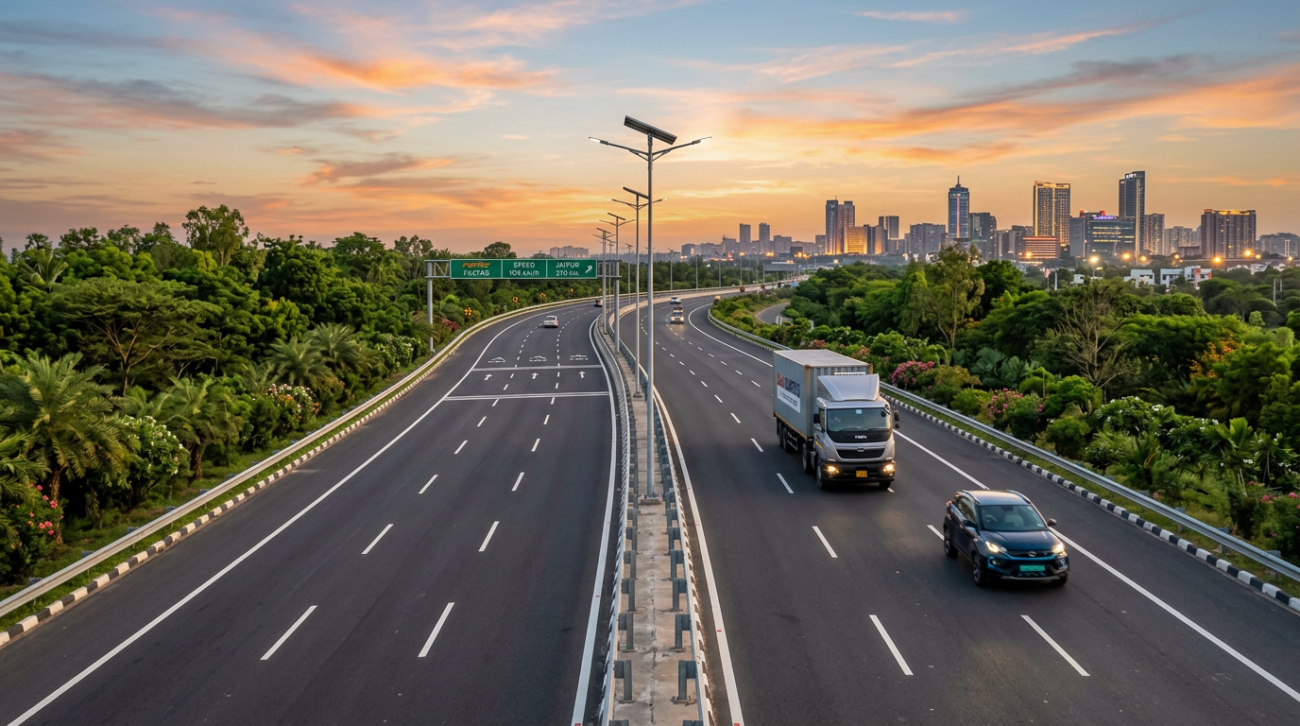
The Ultimate Guide to India’s Highway Revolution
India is currently invest standing at the precipice of an infrastructural renaissance. The Asian Development Bank (ADB) has signaled a massive commitment of $10 Billion specifically targeted at modernizing India’s highway network. This isn’t just a simple capital infusion; it is a strategic maneuver designed to decouple India’s growth from logistical inefficiencies and propel it toward becoming a global manufacturing powerhouse.
As the world’s fifth-largest economy, India’s logistical costs currently hover around 14-16% of its GDP—significantly higher than the 8-10% seen in developed nations. ADB’s investment is the linchpin in the government’s Gati Shakti and Bharatmala initiatives, ensuring that the “arteries” of the nation are wide, smart, and resilient. This guide provides an exhaustive deep-dive into how this capital will be deployed and what it means for the automotive industry, logistics, and the average citizen.
Investment Landscape: A Strategic Comparison
To understand the magnitude of this $10 billion infusion, we must look at how it compares to previous funding cycles and its distribution across various project facets.
| Project Category | Investment Focus | Key Technology | Regional Impact | Completion Horizon |
|---|---|---|---|---|
| Economic Corridors | Industrial Connectivity | Multi-modal Integration | Maharashtra, Gujarat, TN | 2026-2028 |
| Coastal Highways | Export-Import Logistics | Climate-Resilient Pavement | Andhra Pradesh, Odisha | 2027-2029 |
| Northeast Connectivity | Strategic Border Roads | Eco-friendly Slope Stabilization | Assam, Sikkim, Manipur | 2025-2027 |
| Smart Expressways | High-speed Transit | AI-based Traffic Management | UP, Haryana, Karnataka | 2026-2030 |
| Rural Highway Feeders | Last-mile Supply Chain | Low-cost Bitumen Innovation | MP, Bihar, Rajasthan | 2024-2026 |
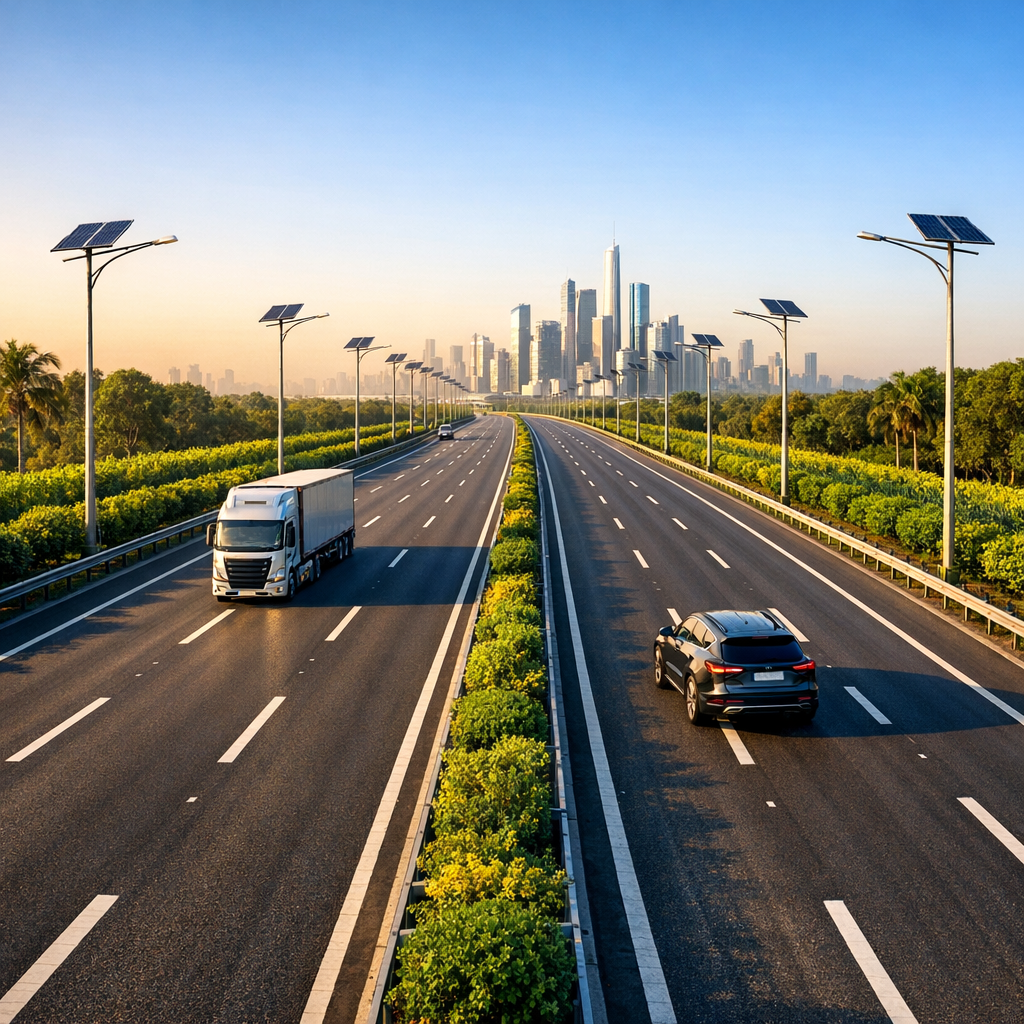
Comprehensive Analysis: 10 Key Pillars of the Transformation
1. Decarbonizing the Road Sector
A significant portion of the ADB funding is earmarked for “Green Highways.” This involves the use of recycled materials like waste plastic and fly ash in road construction. By integrating sustainable materials, the project aims to reduce the carbon footprint of road building by nearly 25%, aligning with India’s Net Zero 2070 targets.
2. Enhancing Logistic Efficiency through MMLPs
The investment supports the development of Multi-Modal Logistics Parks (MMLPs). These hubs allow for seamless transfer of goods between road, rail, and sea. ADB’s capital ensures that the “last mile” connectivity to these parks is robust enough to handle high-tonnage electric trucks, reducing turnaround times for exporters.
3. The Implementation of ITS (Intelligent Transport Systems)
We are moving past simple asphalt. ADB-funded highways will feature integrated AI sensors, automated tolling (beyond FASTag), and real-time weather monitoring systems. These systems help in proactive traffic management, preventing the massive bottlenecks common on Indian NHs.
4. Focus on Road Safety and Fatality Reduction
India accounts for 11% of global road accident deaths. ADB is mandating “Safety Audits” for every kilometer funded. This includes advanced crash barriers, better signage, and dedicated lanes for slow-moving vehicles in semi-urban areas to separate traffic speeds effectively.
5. Climate-Resilient Infrastructure
With increasing instances of floods and landslides, traditional road designs are failing. ADB is introducing “Climate Proofing”—engineering highways that can withstand 1-in-100-year flood events. This is particularly crucial for the East Coast and Himalayan regions where infrastructure is often washed away annually.
6. Social Inclusion and Gender Neutrality
Unlike standard government funding, ADB projects include social safeguards. This means creating employment for local women in toll operations and highway maintenance, and ensuring that highway designs include safe “Way-side Amenities” (WSAs) for women travelers.
7. Regional Economic Integration (South Asia)
Part of this $10 billion investment is intended to boost trade with neighboring Bangladesh, Nepal, and Bhutan. By upgrading “Strategic Corridors,” India becomes the transit hub for South Asia, potentially increasing regional trade by 15-20%.
8. Asset Monetization Support
ADB provides technical assistance to help the National Highways Authority of India (NHAI) monetize its assets through Toll-Operate-Transfer (TOT) models. This ensures that once a highway is built, it generates immediate revenue to pay off the ADB loan and fund future projects.
9. Skill Development for Local Workforce
Modern highway construction requires specialized skills. ADB funding includes training programs for thousands of Indian engineers and laborers in the use of automated pavers, GIS mapping, and high-tensile material handling.
10. Boosting the Automotive Sector
For the automotive industry, better highways mean a higher demand for long-haul trucks and high-performance passenger vehicles. The shift towards 6-lane and 8-lane expressways is directly influencing vehicle manufacturers to produce safer, faster, and more fuel-efficient engines.
With the ADB-funded Smart Expressways coming online, businesses should transition their fleets toward Telematics-ready vehicles. Real-time data from highway sensors will soon integrate directly with fleet management software, allowing you to optimize fuel consumption and avoid congestion-related delays dynamically.
Project Readiness: The User Checklist
Are You Prepared for the Highway Revolution?
If you are a business owner or a frequent traveler, use this checklist to align with the upcoming changes:
- Fleet Upgrade: Ensure vehicles are compliant with new AIS (Automotive Industry Standards) for highway safety.
- Route Optimization: Update your logistics software to prioritize the new ADB Economic Corridors.
- MMLP Proximity: Evaluate warehouse locations within 50km of upcoming Multi-Modal Logistics Parks.
- Digital Payment: Transition all corporate accounts to the upcoming GPS-based tolling systems.
- Sustainability Compliance: Check if your transport partners use “Green-certified” routes to claim carbon credits.
High-Authority Resources
For official data and project updates, refer to these authorized sources:
Asian Development Bank – India Projects & Results
Ministry of Road Transport and Highways (MoRTH) – Annual Reports
National Highways Authority of India (NHAI) Dashboard
Invest India – Infrastructure Investment Opportunities
PM Gati Shakti National Master Plan
Frequently Asked Questions (FAQ)
While the investment aims to build infrastructure, tolling remains the primary recovery mechanism. However, ADB’s focus on efficiency and digital tolling (GPS-based) is expected to lower “indirect costs” for users by reducing wait times and fuel wastage at plazas.
The initial phases of this $10 billion infusion are heavily focused on the Northeast (Sikkim, Assam) for strategic reasons, and the southern industrial belts (Tamil Nadu, Andhra Pradesh) to support the Chennai-Kanyakumari Industrial Corridor.
Typically, ADB lends to the Government of India or State Governments. However, through Public-Private Partnerships (PPP), private developers often execute the projects funded by these loans under the Hybrid Annuity Model (HAM).
No. While ADB does fund rail, this specific $10 Billion commitment is strictly focused on the Road and Highway sector, specifically the expansion of National Highways and State Highways into high-speed corridors.
By slashing logistics costs from 14% to 8%, Indian-made goods become much more competitive in the global market. Reliable highways ensure that parts arrive at factories “Just-in-Time,” mimicking the efficiency of German or Japanese manufacturing hubs.
It involves using advanced geological surveys and heat-resistant bitumen polymers that prevent roads from melting during India’s intense heatwaves or cracking during heavy monsoon cycles, ensuring a longer road lifespan (20+ years).
