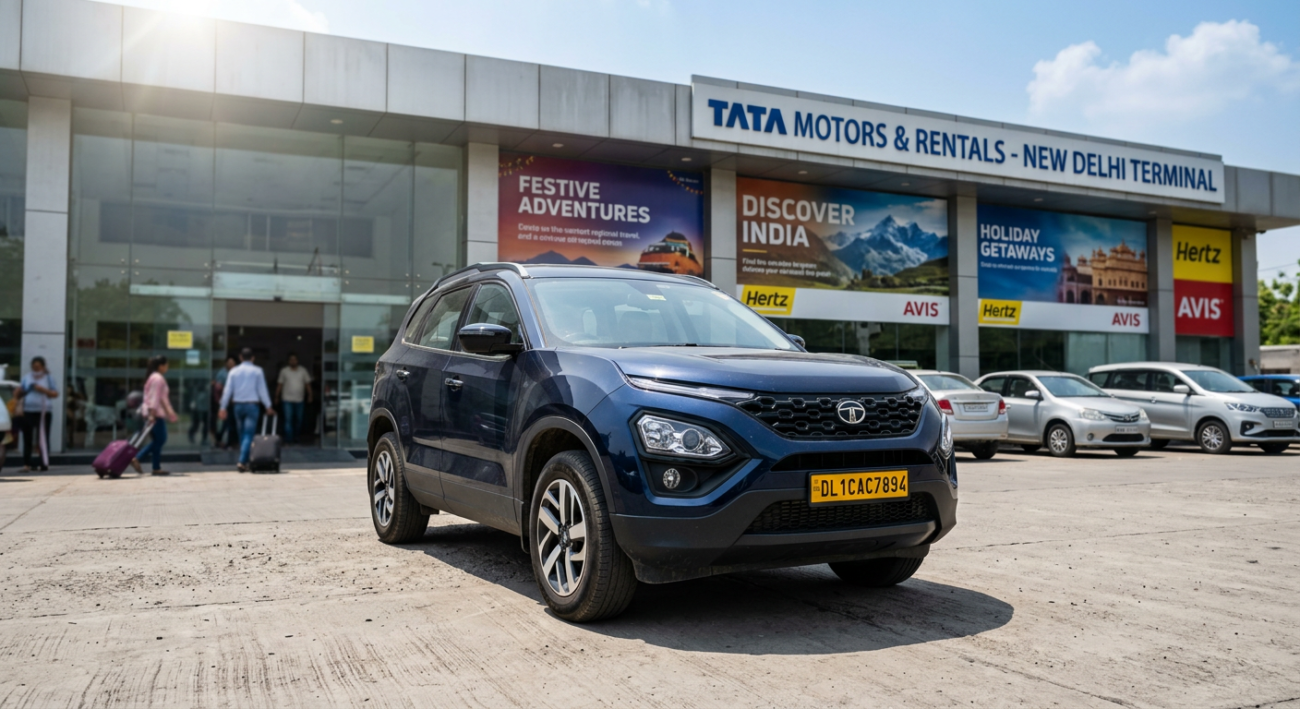
Industry Report & Rental Analytics • May 2026
The domestic premium Tata SUV rental landscape is experiencing an unprecedented shift as the 2026 summer vacation rush begins. Market analytical data indicates a sharp 6% surge in rental rates for the flagship Tata Safari across Tier-1 and Tier-2 tourist hubs. Driven by an overwhelming preference for robust, high-capacity, and safety-oriented family vehicles, fleet operators are adjusting tariffs dynamically to match the incoming demand curve.
For large Indian families preparing for cross-country road trips or mountain expeditions, this sudden pricing evolution significantly impacts travel budgets. Navigating this premium rental ecosystem requires deep insights into regional price matrices, structural vehicle capabilities, operational logistics, and hidden transactional fees. This definitive guide delivers comprehensive, data-driven analysis to safeguard your holiday itinerary and ensure fiscal efficiency.
1. The 2026 Premium SUV Rental Landscape: Tata Safari Price Analysis
To contextualize the current 6% surge, travelers must observe how the Tata Safari stands against its core industry rivals. As fleet allocations shrink due to bulk corporate bookings and group leisure tours, self-drive and chauffeur-driven aggregates have scaled baseline values across the board.
| Vehicle Model & Variant | Baseline Daily Rate (INR) | Peak Summer Rate (INR) | % Price Surge | Primary Value Driver |
|---|---|---|---|---|
| Tata Safari (Accomplished Plus) | ₹6,500 | ₹6,890 | 6.0% | Level-2 ADAS & 5-Star BNCAP Rating |
| Mahindra XUV700 (AX7 L) | ₹6,400 | ₹6,750 | 5.4% | mStallion Engine Performance |
| Toyota Innova Hycross (VX) | ₹7,200 | ₹7,700 | 6.9% | Exceptional Hybrid Fuel Economy |
| Hyundai Alcazar (Signature) | ₹5,200 | ₹5,450 | 4.8% | Dual-zone Climate Control Architecture |
| Kia Carens (Luxury Plus) | ₹4,800 | ₹5,050 | 5.2% | Flexible 3rd-row Seating Versatility |
Fleet allocation matrix algorithms reveal that automated tariff adjustments peak between Thursday afternoon and Sunday evening. By scheduling your collection and drop-off timelines between Monday 09:00 AM and Wednesday 04:00 PM, you bypass the weekend surge triggers, often neutralizing the 6% summer markup entirely.
2. Comprehensive Analysis: 10 Core Structural Factors Driving the Price Surge
I. Uncompromised Structural Integrity & 5-Star Safety Architecture
Modern Indian consumers prioritize safety above luxury. The Tata Safari is built on the robust OMEGARC platform, derived from Land Rover’s legendary D8 architecture, and holds a highly coveted 5-star rating from both Global NCAP and Bharat NCAP. Families booking vehicles for long-distance highways like the Samruddhi Mahamarg or Delhi-Mumbai Expressway are willing to pay a premium for a reinforced cabin cage, 7 airbags, and standard Electronic Stability Control (ESC).
II. Advanced Driver Assistance Systems (ADAS Level 2) Integration
The premium rental tier has seen a massive surge in demand for the Safari Accomplished and Adventure variants due to their built-in Level-2 ADAS suite. Features such as Adaptive Cruise Control with Stop & Go, Autonomous Emergency Braking, and Blind Spot Detection dramatically reduce driver fatigue during grueling 500-kilometer holiday transits. Rental operators capitalize on this tech-driven demand by adding premium service margins to ADAS-equipped vehicles.
III. Dynamic Supply Elasticity and High Summer Tourism Projections
According to tourism forecasts by the Ministry of Tourism, domestic leisure travel during the May-June window is projected to increase by 18% year-on-year. As urban populations migrate en masse toward hill stations in Himachal Pradesh, Uttarakhand, and the Western Ghats, localized SUV supply collapses under the weight of exponential consumer demand. This is a classic supply-demand imbalance causing pricing corrections across major self-drive platforms.
IV. Kryotec 2.0 Diesel Engine Optimization for Heavy Payloads
The Safari’s 2.0L turbocharged diesel engine, producing 170 PS of power and 350 Nm of torque, is highly favored for mountain driving. When an SUV is packed with seven occupants and extensive luggage, smaller petrol or naturally aspirated engines struggle on steep inclines, spiking fuel consumption. The Kryotec engine maintains optimal thermal efficiency and pulling power under max load, justifying its higher rental baseline over lighter multi-purpose vehicles.
V. Premium Multi-Zone Comfort and Venting Capabilities
With Indian summers routinely breaching the 42°C mark in the plains, vehicle climate control efficiency can make or break a family vacation. The Tata Safari addresses this with a multi-zone automatic climate control layout that incorporates dedicated roof-mounted AC vents for both the second and third rows. Coupled with ventilated front and second-row captain seats, it shields occupants from cabin heat-soak, making it a highly requested premium model.
VI. Terrain Response Modes for Off-Grid Exploration
Summer vacations frequently involve navigating unpaved detours, washed-out mountain passes, or sandy riverbeds. The Safari’s advanced Terrain Response Modes (Normal, Wet, and Rough Road) paired with Electronic Traction Control provide novice drivers with confidence in challenging environments. Fleet operators understand that the versatility of a true SUV commands a higher premium than standard front-wheel-drive crossovers.
VII. Inflationary Pressures on Operational Fleet Management
Beyond simple consumer demand, rental agencies are facing increased overhead costs. Comprehensive commercial insurance premiums for high-value utility vehicles have risen, alongside escalating maintenance schedules mandated by OEM compliance. To sustain operating profit margins, these institutional costs are passed down directly to end consumers through adjusted base rates.
VIII. The Appeal of Imperial Cabin Space and Ergonomic Packaging
Unlike compromised 5+2 seating configurations, the Safari provides genuine ergonomic support for adult occupants in the rear rows. The inclusion of “Boss Mode”—which allows the rear passenger to slide the front seat forward mechanically—creates an executive-class lounge experience. This comfort profile appeals directly to multi-generational families traveling with elderly members, boosting demand for high-spec variants.
IX. Sophisticated Digital Real Estate and Infotainment Suites
Long road trips require seamless onboard connectivity and entertainment. The Tata Safari boasts a 12.3-inch cinematic infotainment system by HARMAN, wireless Android Auto and Apple CarPlay, and a 10-speaker JBL audio array with acoustic profiles. This high level of digital engagement makes it an attractive proposition for tech-savvy millennial travelers who view the vehicle as an extension of their living space.
X. Brand Prestige and Aesthetic Assertiveness on Indian Roads
The visual presence of the Tata Safari, featuring its signature parametric grille, connected LED DRLs, and commanding 19-inch dual-tone alloy wheels, delivers an undeniable road presence. For many vacationers, renting an aspirational vehicle is a form of lifestyle fulfillment. Rental agencies capitalize heavily on this psychological driver during peak social travel seasons.
3. Mitigating the Price Surge: Strategic Booking Metrics
To shield your finances from the escalating tariff framework, look closely at the mathematical structure of modern rental contracts. Total expenditure is typically governed by the following relationship:
By opting for a “Zero-Fuel” booking package, where the renter assumes responsibility for actual fuel consumed rather than paying flat-rate mileage penalties, you can often save up to 12% on long-distance itineraries. Furthermore, cross-referencing your personal credit card auto-rental insurance policies can eliminate the need to buy duplicate collision damage waivers from the rental agency desk.
4. Comprehensive Frequently Asked Questions (FAQ)
5. Institutional Resources and Regulatory References
- For formal safety ratings and crash test parameters, review the official portal of Global NCAP.
- To verify vehicle registration authentications and operator commercial permits, utilize the government’s Parivahan Sewa Portal.
- Review official engineering and feature specifications for the latest models directly at Tata Motors Passenger Vehicles.
- Check official seasonal highway speed limits and travel advisories via the National Highways Authority of India (NHAI).
