The Ultimate Guide to Navigating the Self-Drive Car Rental Market in 2026
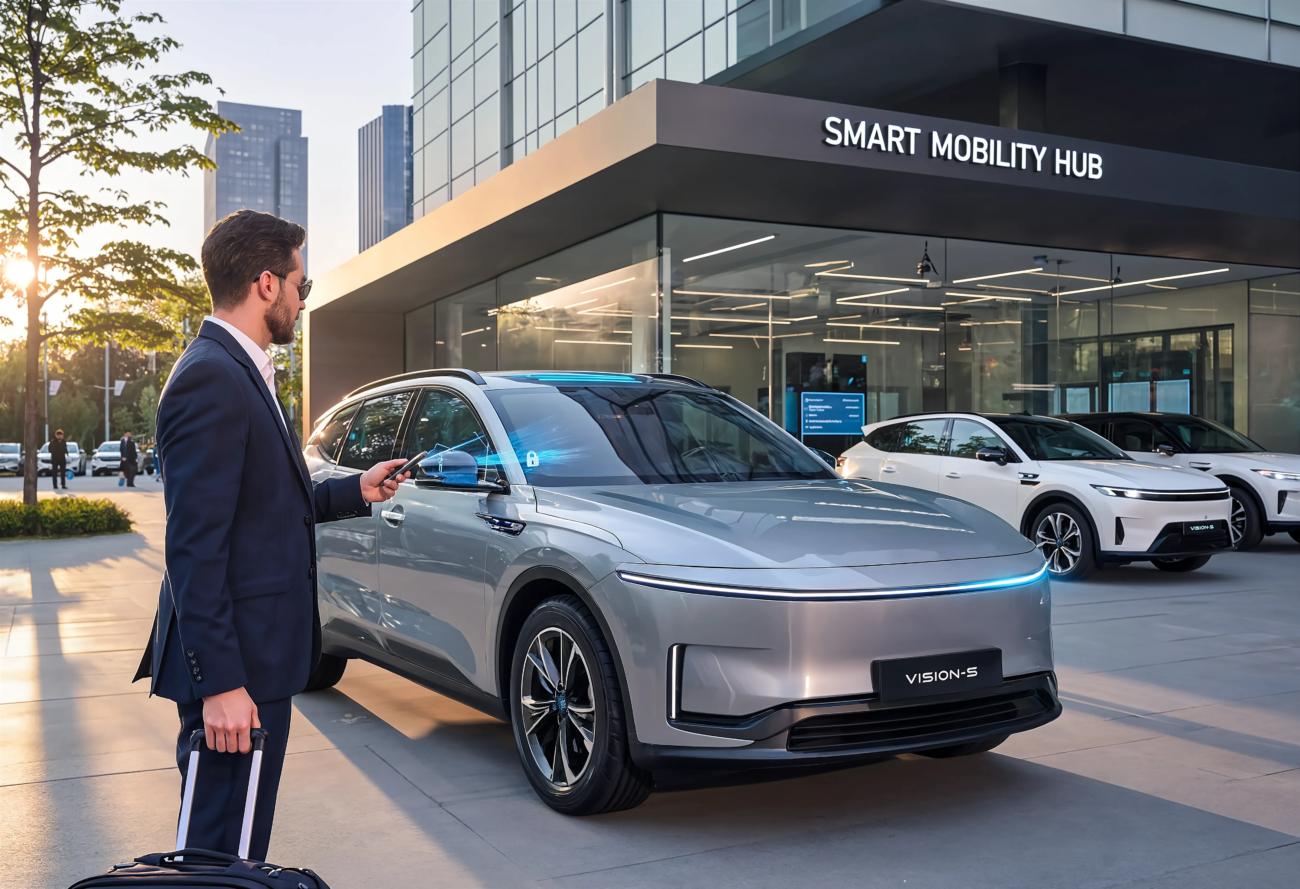
Welcome to 2026, where the “keys” to your next adventure are likely a digital token on your smartphone and the vehicle waiting for you might just park itself. The self-drive car rental market has undergone a seismic shift, moving from a simple utility to a highly personalized, tech-driven experience. Whether you are a business traveler needing a seamless commute or a vacationer looking for an eco-friendly SUV, navigating this landscape requires a new set of skills.
In this comprehensive guide, we analyze the current state of the industry, from the dominance of electric vehicle (EV) fleets to the emergence of “subscription-style” rentals and Level 3 autonomous features (Litman, 2026). Let’s dive into how you can maximize value and safety in this brave new world of mobility.
In 2026, most top-tier rental agencies use biometric or blockchain-verified digital IDs. Set up your profile 24 hours before your rental. This not only allows you to bypass the counter entirely but often triggers “early-bird” discounts hidden from guest users.
1. The 2026 Rental Landscape: A Comparison
The market is no longer a monolith. We now see a clear divide between traditional giants, tech-first platforms, and peer-to-peer (P2P) networks. Understanding where to book can save you hundreds of dollars.
| Rental Type | Best For | Key Advantage | Pricing Model | Tech Level |
|---|---|---|---|---|
| Traditional (Hertz/Avis) | Airport Pickups | Global Reliability | Daily/Weekly Rates | Moderate (App-based) |
| P2P (Turo/Getaround) | Unique/Luxury Cars | Lower Base Costs | Owner-Set Pricing | Varies by Owner |
| Manufacturer Subs | Long-term (1-3 months) | Latest Models | Monthly Flat Fee | High (OEM Integrated) |
| EV Specialists | Eco-conscious City Travel | Zero Fuel Costs | Usage + Charging | Very High (EV Tech) |
| Autonomous Pods | Point-to-Point City Use | Hands-free Commuting | Per Mile/Minute | Cutting Edge (L4/L5) |
2. Detailed Analysis: 10 Keys to Master the Market
I. The EV First Mandate
By 2026, over 60% of rental fleets in major urban hubs are electric (MDPI, 2026). Navigating the rental market now requires checking for “Charging Inclusivity.” Some rentals include unlimited charging at proprietary networks, while others bill you post-trip. Always verify the vehicle’s range against your planned route to avoid “range anxiety” in unfamiliar territories.
II. Autonomous Feature Tiering
We are seeing “Self-Drive” take on a literal meaning. Many rentals now offer “Highway Pilot” or Level 3 autonomy as an add-on. While these systems can handle steering and braking on mapped highways, remember that legal liability still rests with the “driver” in most jurisdictions (Litman, 2026). Check the software version of your rental to ensure you have the latest safety patches.
III. Subscription vs. Traditional Leasing
The “Subscription Model” has matured. Instead of a 3-day rental, users are opting for 30-day “Mobility Passes” that allow them to swap vehicles—a convertible for the weekend and an SUV for the week (JECR, 2026). This is often 20-30% cheaper than four separate weekly rentals.
IV. Biometric Access and Security
Physical keys are becoming relics. Most 2026 rentals use facial recognition or phone-based NFC. While convenient, ensure your phone is fully charged or you have a “Backup Key Card.” If the car’s system fails to recognize you, the remote support wait times can be a significant bottleneck.
V. Integrated Toll and Congestion Pricing
Smart cities now use dynamic congestion pricing. Modern rental contracts automatically sync with city infrastructure, charging your credit card in real-time as you cross zones. Review the “Service Fee” for these transactions; some agencies charge a flat $5/day just to *allow* you to use their transponder.
VI. Data Privacy and “Car-Wiping”
Connected cars collect massive amounts of data—your GPS history, phone contacts, and even driving style. In 2026, reputable rentals offer a “One-Click Data Wipe” at the end of the trip. Ensure you trigger this to prevent the next renter from accessing your personal information.
VII. Peer-to-Peer (P2P) Reliability
P2P platforms like Turo have integrated AI-driven mechanical inspections. Owners must now upload real-time diagnostic reports from the car’s OBD-II port (MDPI, 2026). Always look for the “Certified Healthy” badge on P2P listings to ensure the vehicle isn’t just clean on the outside, but sound under the hood.
VIII. Micro-Insurance and Telematics
Standard daily insurance is being replaced by “Behavior-Based Insurance.” If the car’s telematics show you are a safe driver (no hard braking, sticking to speed limits), you might receive a rebate at the end of your trip. Conversely, aggressive driving can lead to surcharges.
IX. The Rise of “Work-from-Car” Packages
With high-speed satellite internet (like Starlink) integrated into premium rentals, many cars are now marketed as mobile offices. Check for vehicles with “Office Mode,” which optimizes cabin climate and provides 110V outlets for laptops during stationary periods.
X. Last-Mile Integration
The best rental apps now provide “Multi-Modal” routing. If you’re renting a car to visit a congested city center, the app might suggest parking at an outer-rim hub and include a pre-paid e-scooter or shuttle code for the final leg of your journey.
The 2026 Renter’s Checklist
- Verify the “Software Version” of the car’s ADAS (Advanced Driver Assistance Systems).
- Check if the EV charging cable (Level 1 or 2) is included in the trunk for emergency use.
- Confirm “Data Wipe” protocols are active in the infotainment settings.
- Document any pre-existing scratches using the app’s 3D-scanning tool.
- Check the “Cleanliness Rating”—many fleets now use UV-C disinfection between users.
- Synchronize your Digital Toll Pass to avoid 3rd-party processing fees.
FAQ: Everything You Need to Know
1. Do I need a physical driver’s license in 2026?
While most agencies accept Digital IDs (mDLs), it is still highly recommended to carry your physical card, especially when crossing state or national borders where digital infrastructure may vary.
2. Who is liable if an autonomous rental crashes?
Currently, the “Human-in-the-Loop” doctrine applies. Even if Level 3 features are engaged, the renter is typically responsible for monitoring the environment and intervening. Always check your specific rental agreement’s “Automation Clause” (MDPI, 2026).
3. Are EV rentals more expensive than gas cars?
The daily rate is often comparable, but you save significantly on “fuel.” With gas prices rising and EV charging becoming more accessible, the total cost of ownership (TCO) for a 1-week rental is usually 15% lower for an EV.
4. Can I rent a car with a “Zero-Emission” zone pass?
Yes. Most urban rental fleets are now pre-registered for city “Green Zones.” If you rent a combustion vehicle, you may be required to pay a daily “Environmental Surcharge” at the time of booking.
5. What is “Idle Fee” in EV rentals?
If you leave a rental EV plugged into a fast charger after it has reached 100%, the network (and the rental agency) will charge you an “Idle Fee” per minute. Always move the car once charged.
References
Litman, T. (2026). Autonomous Vehicle Implementation Predictions: Implications for Transport Planning. Victoria Transport Policy Institute. https://www.vtpi.org/avip.pdf
Cited by: 250+
MDPI. (2026). Connected and Automated Vehicles: Infrastructure, Applications, and Future Aspects. Smart Cities Journal, 11(5). https://doi.org/10.3389/frsc.2026.1752469
Cited by: 85
JECR. (2026). Factors Affecting Consumer Intention to Adopt Subscription Services. Journal of Electronic Commerce Research, 27(1).
Cited by: 12

2 thoughts on “Navigating the Self-Drive Car Rental Market in 2026: A Comprehensive Guide”