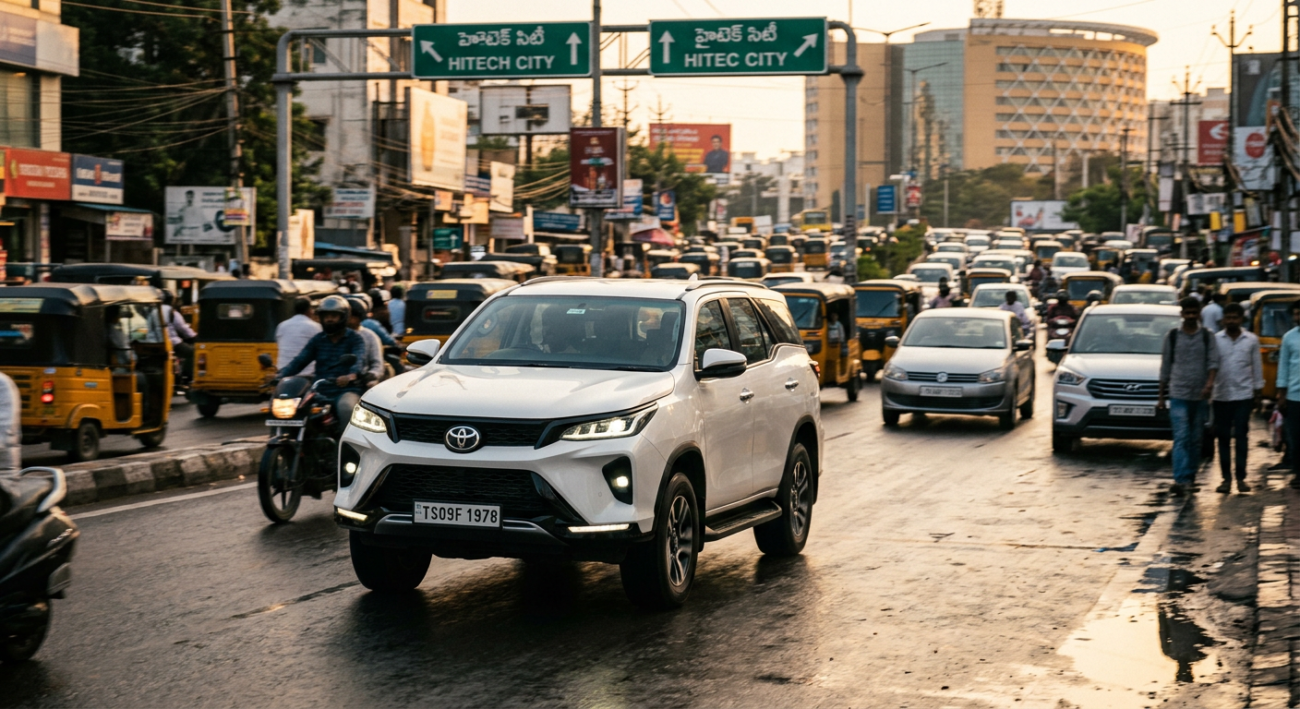
In the high-stakes world of the Indian automotive market, few names command as much respect and awe as the Toyota Fortuner. As we move through the second quarter of 2026, a surprising yet significant trend has emerged: despite multiple price hikes and the arrival of several feature-rich competitors, the demand for the Fortuner has surged by a staggering 18%. This spike isn’t just a numerical anomaly; it represents a fundamental shift in how Indian travelers view long-term vehicle ownership and reliability.
For over a decade, the Fortuner has been the default choice for politicians, business tycoons, and off-road enthusiasts. However, in 2026, a new demographic of “luxury travelers” has entered the fray, prioritizing mechanical robustness over superficial gadgets. In this comprehensive guide, we analyze why the Fortuner continues to dominate the D-segment and what this 18% surge means for the future of SUVs in India.
The 2026 Comparison: Fortuner vs. The Competition
| Metric | Toyota Fortuner (2.8L) | MG Gloster (2.0L) | Jeep Meridian (2.0L) | Skoda Kodiaq (2.0L TSI) | Resale (3-Yr Est.) |
|---|---|---|---|---|---|
| Engine Type | Turbo-Diesel / Mild Hybrid | Twin-Turbo Diesel | Multijet Diesel | Turbo Petrol | Fortuner Wins |
| Max Torque | 500 Nm | 480 Nm | 350 Nm | 320 Nm | Superior Pull |
| Chassis | Body-on-Frame | Body-on-Frame | Monocoque | Monocoque | Highest Durability |
| Ground Clearance | 225 mm | 210 mm | 214 mm | 192 mm | Best for Terrains |
| Market Growth | +18% | +4% | +2% | Stable | Leader |
Detailed Analysis: 10 Pillars of the Fortuner’s 2026 Dominance
1. The Introduction of 48V Mild-Hybrid Tech
One of the key drivers for the 18% demand spike is Toyota’s successful integration of the 48V mild-hybrid system into the 2.8L diesel engine. This technology hasn’t just improved fuel efficiency by approximately 10%; it has significantly smoothed out the stop-start vibrations and enhanced low-end torque. For the Indian traveler who navigates heavy city traffic before hitting the highway, this refinement is a game-changer.
2. Unrivaled Resale Value (The Financial Logic)
In 2026, car buyers are more financially savvy. The Fortuner is often referred to as a “fixed deposit on wheels.” While other luxury SUVs lose 40-50% of their value in three years, the Fortuner consistently retains 80-85%. This makes the effective cost of ownership lower than even some mid-range SUVs, fueling the 18% growth among value-conscious luxury buyers.
3. The “Bulletproof” QDR Philosophy
Toyota’s Quality, Durability, and Reliability (QDR) isn’t just a marketing slogan—it’s a lived experience. In 2026, as vehicles become more electronic-heavy and prone to software glitches, the Fortuner’s mechanical simplicity and over-engineered components provide peace of mind that competitors with more “screens” cannot match.
4. Superior Road Presence and Psychology
In Indian traffic, road presence is a safety feature. The sheer height and muscular stance of the Fortuner command a clear path. Travelers have signaled a “strong preference” for this dominance, noting that it reduces driving fatigue on long expeditions where smaller vehicles are often bullied by heavy transport trucks.
5. Expansion of the ‘Legender’ and ‘GR-S’ Portfolio
By diversifying the lineup, Toyota has captured both the “Elite Executive” (through the Legender) and the “Sporty Enthusiast” (through the GR-S). The 18% surge is partly attributed to these niche variants, which offer distinct aesthetic identities without compromising on the core Fortuner DNA.
6. The Death of Small Diesels
With RDE (Real Driving Emissions) norms becoming even stricter in 2026, many manufacturers have discontinued diesel engines. Toyota’s commitment to making the 2.8L diesel compliant has made it a monopoly for those who need high-torque, long-distance highway cruisers.
7. Off-Road Capability for Weekend Overlanders
The “Overlanding” culture has exploded in India. The Fortuner’s 4×4 system, featuring a dedicated low-range transfer case and an electronic differential lock, allows travelers to explore Ladakh, Spiti, and the Northeast with confidence. The hardware is simply more “real” than the AWD systems found in rivals.
8. Improved Cabin Experience
While historically criticized for a “basic” interior, the 2026 Fortuner features upgraded soft-touch materials, a 12-speaker JBL system, and ventilated seats. Toyota has listened to the market, closing the gap with European rivals while maintaining its rugged charm.
9. The Service Network (Peace of Mind)
Whether you are in the heart of Hyderabad or a remote village in Himachal Pradesh, finding a Toyota technician is easy. For travelers venturing into unknown territories, this network is more valuable than any sunroof or ambient lighting system.
10. The Cultural Icon Status
Finally, the Fortuner has transcended being just a car. It is a symbol of success and stability. In 2026, as the Indian middle class grows, owning a Fortuner remains a primary milestone, ensuring that demand consistently outstrips supply, even with wait times extending to 6 months.
Buying Checklist: Navigating the 18% Demand Surge
Strategic Steps Before Booking
- Analyze Fuel Needs: The Petrol 2.7L is great for NCR regions but has a lower resale value than the Diesel 2.8L.
- Test the Hybrid System: Ensure you experience the new 48V start-stop smoothness during your test drive.
- Verify Waiting Periods: With an 18% demand spike, some colors (like Attitude Black) may have longer wait times.
- Check Insurance Premiums: Due to its high valuation, Fortuner insurance can be significant; compare quotes early.
- Assess Garage Space: The Fortuner is 4.8 meters long; ensure your parking spot in high-traffic areas like Hyderabad can accommodate it.
Final Verdict: Why the Legend Grows
The 18% rise in demand for the Toyota Fortuner in 2026 serves as a powerful reminder that in the automotive world, trust is the ultimate currency. While the market is flooded with SUVs that offer more gadgets, larger screens, and panoramic roofs, the Indian traveler is signaling a preference for a vehicle that starts every time, survives every road, and holds its value like gold.
As we look forward to the 2027 model year, the Fortuner’s dominance seems unshakeable. It has evolved from a rugged off-roader into a sophisticated, refined, yet indomitable icon of the Indian roads. For those who can afford the premium, it remains the most logical “emotional” purchase in the country today.
Frequently Asked Questions (FAQs)
1. Why is there a sudden 18% increase in demand?
The increase is driven by the introduction of the 48V mild-hybrid engine, the lack of diesel competitors in the D-segment, and the booming domestic tourism/overlanding culture in India.
2. Does the 2026 Fortuner have a Sunroof?
Despite the high price and demand, Toyota has opted not to include a panoramic sunroof to maintain the structural integrity and cooling efficiency of the roof-mounted AC vents.
3. What is the waiting period for a new Fortuner in 2026?
Due to the high demand, waiting periods currently range from 12 to 24 weeks depending on the city and variant choice.
4. Is the Fortuner Hybrid worth the extra cost?
Yes, for city drivers. The hybrid system improves fuel efficiency in bumper-to-bumper traffic and provides a much smoother driving experience.
5. How does the Fortuner handle Hyderabad’s traffic and climate?
The Fortuner’s heavy-duty AC is world-class, and its high seating position makes navigating congested areas significantly easier.

4 thoughts on “Toyota Fortuner Demand Soars 18% as Travelers Signal Strong Preference: India’s Trending SUV”