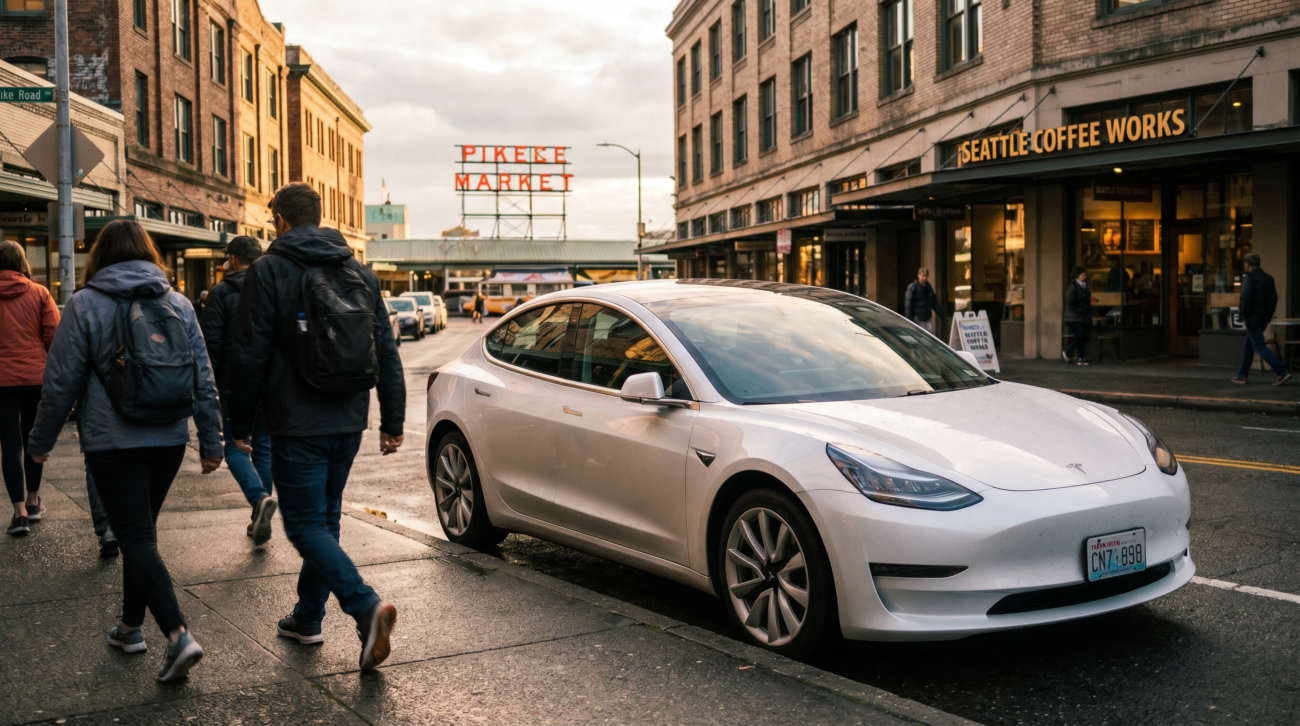
The global automotive rental market is witnessing a tectonic shift as the “green premium”—once the primary barrier to entry for electric tesla vehicle (EV) adoption—begins to evaporate. Recent market data indicates that Tesla Model 3 rental prices have crashed by a staggering 14% across major global hubs. This price correction marks a pivotal moment for travelers, tech enthusiasts, and budget-conscious drivers alike. We are officially entering the most affordable era of electric mobility.
Pro-Tip: The “Battery-Back” Hack
Most rental agencies now offer a “Prepaid EV Charge” option. However, if your hotel or destination offers free Level 2 charging, skip the prepay. Returning the car with an 80% charge (easily achieved overnight) can save you an additional $35-$50 compared to internal combustion engine (ICE) refueling fees.
Price Comparison: The New Landscape of Rental Value
To understand the magnitude of this 14% crash, we must compare the Tesla Model 3 against its traditional and electric peers. The following table reflects the new adjusted daily averages.
| Vehicle Model | Daily Rate (Post-Crash) | Fuel/Energy Cost (per 100 mi) | Maintenance Reliability | Tech Features |
|---|---|---|---|---|
| Tesla Model 3 | $54 – $68 | $7.00 – $9.00 | High | Autopilot / 15″ Touchscreen |
| BMW 3 Series | $82 – $115 | $18.00 – $22.00 | Medium | iDrive / Premium Audio |
| Polestar 2 | $59 – $74 | $8.00 – $10.00 | High | Google Native OS |
| Toyota Camry | $48 – $62 | $14.00 – $16.00 | Very High | Standard Safety Sense |
| Chevrolet Bolt EUV | $42 – $55 | $6.00 – $8.00 | High | Basic EV Interface |
10 Reasons Why Tesla Rental Prices Are Crashing
1. Massive Fleet Influx from Hertz and Sixt
In a bid to modernize, major rental conglomerates committed to purchasing hundreds of thousands of Teslas. As these fleets reached full capacity this year, the sheer volume of available units has forced a price war to ensure high utilization rates.
2. The “Used Tesla” Market Saturation
Tesla’s aggressive price cuts on new vehicles have lowered the residual value of older fleet models. Rental companies adjust their daily rates based on the vehicle’s capital cost; lower asset values lead directly to lower rental stickers.
3. Competitive Pressure from Polestar and Hyundai
Tesla no longer holds the monopoly on the premium EV experience. The entry of the Polestar 2 and Hyundai IONIQ 6 into rental fleets has introduced healthy competition, breaking the “Tesla Premium” pricing model.
4. Maturing Charging Infrastructure
Infrastructure growth via the National Electric Vehicle Infrastructure (NEVI) program has reduced “range anxiety.” As EVs become “normal,” they are being priced like standard mid-size sedans.
5. Operational Cost Efficiency
Rental agencies have discovered that Teslas require significantly less maintenance (no oil changes, less brake wear). These operational savings are finally being passed to the consumer to drive volume.
6. Software-Defined Logistics
Tesla’s integrated software allows rental companies to track battery health and location more efficiently than ICE vehicles, reducing the overhead costs of fleet management.
7. Corporate ESG Mandates
Many corporations now mandate EV rentals for employees. High-volume corporate contracts provide a “floor” for rental companies, allowing them to discount the remaining inventory for the general public.
8. Seasonal Surplus in Urban Hubs
In cities like Los Angeles and San Francisco, the density of Tesla rentals is so high that off-peak seasons trigger automatic algorithmic price drops to move stagnant inventory.
9. Secondary Market for Credits
Federal and state incentives for “Green Fleets” provide tax breaks to rental companies. These subsidies act as a cushion, allowing agencies to drop prices while maintaining profitability.
10. The Rise of Peer-to-Peer Rentals
Platforms like Turo have created a massive supply of privately owned Teslas. Traditional agencies (Hertz, Avis) are slashing prices by 14% specifically to compete with these independent owners.
Essential Tesla Rental Checklist
- The Tesla App: Ask the counter if they support app-access. This allows you to use your phone as a key and pre-condition the cabin.
- Supercharger Status: Confirm that the car is linked to the agency’s billing. You should simply “Plug and Play.”
- J1772 Adapter: Check the sub-trunk for a small adapter. You’ll need this to use non-Tesla (Level 2) public chargers.
- Tire Pressure: EVs are heavy; ensure tires are at the recommended PSI (usually 42 PSI for Model 3) to maximize your range.
- Valet Mode: Learn how to engage Valet Mode via the screen if you plan on using hotel parking services.
Understanding the Real-World Savings
The 14% drop in daily rates is only the tip of the iceberg. According to the EPA’s Green Vehicle Guide, the cost per mile for an EV is roughly 1/3 that of a gasoline equivalent. For a traveler driving 500 miles over a weekend, the Tesla Model 3 saves approximately $60 in fuel on top of the $20-$40 saved on the rental rate itself.
Comprehensive FAQ
A: No. Standard major credit cards are accepted. However, ensure your card provides “Loss Damage Waiver” (LDW) coverage for “Luxury” or “Exotic” categories, as some basic cards exclude Teslas.
A: On average, a 20% to 80% charge costs between $12 and $18, depending on local utility rates. This is significantly cheaper than a full tank of premium gasoline.
A: The biggest change is “One-Pedal Driving.” When you lift your foot off the accelerator, the car slows down aggressively to regenerate power. Most drivers master this within 10 minutes.
A: While the Model Y has seen price reductions, the Model 3 has seen the most dramatic “crash” due to higher inventory levels in the rental sector.
A: Yes. Tesla’s navigation automatically plots Supercharger stops. You can see the health and availability of chargers in real-time on the center screen.

https://shorturl.fm/LHaiJ